The Island of Cát Bà, Vietnam

Northeast of Vietnam, at Gulf of Tonkin, there is a bay formed by a set of more than three thousand islets that was recognised as Biosphere Reserve by UNESCO in December 2004: We are talking about Halong Bay. But today we specifically want to focus on the Island of Cát Bà, the largest in the area, and the National Park that has the same name.

The great beauty of the island and its overwhelming environment offer travellers the opportunity to escape, even for a few days, in one of the increasingly scarce paradises of our planet. In Cát Bà you can stay in some of the recommended hotels with splendid views of the bay and the floating fishing villages.

Cát Bà also offers visitors a wide variety of small establishments with numerous offers of fresh fish cooked according to the specialty of the place. Although we may think that it is a mass area for tourism, the truth is that Cát Bà offers most of the year a very relaxed atmosphere, in which each one will be able to disconnect and enter the pleasant local rhythm.

Another experience that should not be missed is to share a small boat and visit the bay more thoroughly for a day. On these excursions you will discover hidden bays of emerald waters which can only be accessed through a natural tunnel in the rock when the tide is low.You will also be able to visit some incredible caves in this area.

If one day you go to Vietnam, it is worth diverting three or four days to visit Halong Bay and Cát Bà. They can be reached easily from Hanoi, which is the capital of the country.

The most fascinating destinations on Cat Ba Island for a short vacation

The most fascinating destinations on Cat Ba Island for a short vacation

If you have the opportunity to travel to northern Vietnam, Cat Ba Island is a less touristy but very attractive place. The Bay of Lan Ha, the Island of Mono, the Cave of Marble are the ones you should not miss when you visit this famous tourist island.

The fresh air, the water with the blue color of pearl, fresh fish and seafood, these are not all the advantages of the Island of Cat Ba. Being a place of vacation with the average temperature of 25 degrees Celsius, it is also an ideal and convenient destination for those who love to explore tourism with some suggestions that we give below.

The Bay of Lan Ha

Lan Ha Bay is located very close to Ha Long Bay, east of Cat Ba Island. Thanks to more than 400 small and large islands covered by the green color of the plants, it is considered as “a forgotten paradise”. Few people know about this place. However, it is a great advantage to travel to Lan Ha since this place is quieter than other tourist places.

From the dock, you can rent a boat of 20-30 seats to swim in the Monkey Island, visit the fishing village of Van Gia, fish or visit the lighthouse on the island of Long Chau.

The fortress of Than Cong

Located at 177 m above the sea, the Than Cong fortress is also known as “El Pico-177”. It is an ideal place to observe the sunset or the sunrise on the island of Cat Ba with a wide perspective from above. The Cat Co 1 beach and the Cat Co 2 beach impress by the soft curvature, the vivid color of the ships and the green islands between the wave and the water, as if it were a natural painting.

The Cat Ba National Park

You can make a trip to the jungle and discover the vegetation and animals. This national park is home to the white-headed langur – the unique animal of this island.

Tourists can choose their own means of transport to have a panoramic view: cars, motorbikes, bicycles, hiking or why not climb the mountain. Above all, you can go to the forest at night to discover nocturnal animals such as reptiles and frogs.

The caves

Cat Ba Island has been blessed with about 20 caves such as the Trung Trang Cave, the Marble Cave, the Thien Long cave, and more.

What to see on the island of Cat Ba?

The island of Cat Bat is surrounded by about 360 ​​large and small islands, of which the island of Cat Ba is the main one with the dimension of 100 km2. For tourists who travel to Vietnam, visiting Cat Ba is a must. This island attracts many tourists for its diverse and beautiful tourist area, including the mountains, caves, forests and wild beaches.

What to see on the island of Cat Ba

In this part, we present some useful things for you to have more information about Cat Ba if you want to travel to this place.

Swimming and sunbathing

Most tourists come to Cat Ba in order to have the opportunity to immerse themselves in the pure and fresh water of the beaches here. In Cat Ba you have two famous beaches: Cat Co 1 and Cat Co 2, located one kilometre from the city center. These are the places where most tourists find themselves due to its very large size and its fine white sand.

Visit the bay of Lan Ha

Located in the southern part of Ha Long Bay, the bay of Lan Ha is a bit like this bay. However, this place has many things that we cannot find in Ha Long Bay. In Cat Ba, you will see some small islands with sand in the foothills of the mountain. In Lan Ha, we can see the floating village of Van Gia, where we will observe hundreds of families living in the houses designed in the style of the floats. This town has existed for a hundred years.

Visit the village of Viet Hai

From the bay of Lan Ha, you will continue your journey visiting the village of Viet Hai – a village located within the sea, surrounded by the high mountains and old forests of the Cat Ba National Park. Very few Vietnamese tourists come to this place, however, Viet Hai is a very attractive destination for foreign tourists. The Viet Hai locals have maintained their aspects of primitive life from the past.

Immerse yourself in the sea to observe corals

Under the underground rocks at the foot of the mountain, we can see many red corals, along with many precious seafood and many marine species, such as: abalone, pearls, palinúridos and multicoloured fish. All this creates a bright and unique beauty. If you have the opportunity to dive into the sea once, you will be surprised by the magnificent landscapes that can only be seen on television or in the Discovery channel films.

Stroll along the beach at night

You can ride a bike or motorcycle along the beach and take in the fresh air. However, it is forbidden to drive on the weekend here, so it is better to walk.

How to clean windows with white vinegar?

Nobody likes to have dirty windows. Here are some tips for easy and efficient window cleaning using white vinegar.

Tips for preparing the cleaning product

To prepare a homemade natural cleanser, simply mix a dose of vinegar with 5 doses of clear water. The temperature of the water can be fixed according to your own desire. However, be careful not to freeze your fingers with a product that is too cold or burn your fingers with hot water.

It is also possible to use white vinegar and fine salt to clean very dirty windows with very heavy soiling. For the preparation, just mix the salt that you will then cover with vinegar. Let the two products mix until they form a homogeneous solution.

Proceed to cleaning!

Simply wet a microfiber cloth with the previously prepared product and scrub all visible stains on the entire surface of your windows. Do not forget to then pass a squeegee to wipe it off and avoid the traces, and finish by passing a dry cloth!

Fast and economical, this solution is ideal for cleaning windows.

9 tips for washing windows

How to wash your windows effectively?

Windows get dirty easy and always require good cleaning to keep them clean. We do not always know how to wash them well and what products we should use.

Whether for the windows of a house or other types of objects or glass furniture in the house, there are effective cleaning tips. Here are some tips to help you clean your windows.

1. Do not clean the windows on sunny days

If you clean your windows when it’s sunny, the cleaning products used will dry too quickly and it will leave marks on your windows. Therefore, you should try to avoid cleaning your windows in sunny days.

2. Always remove dust first

Before cleaning any window, always remove the dust first.

3. Wash the window frames first

If you wash your window panes, always start by washing the frames.

4. Clean the outer panes before the inner panes

Always for windows, wash your exterior windows first by following up and down and left and right movements.

5. Clean the inside windows

Always from top to bottom and from left to right, you can now wash your interior windows.

6. Use alcohol to wash the windows

For all types of windows, you can roll newspaper to make a kind of stamp, soak it with alcohol and then rub the windows with it.

7. Use white vinegar to clean

Again, to properly clean windows, you can also simply use white vinegar mixed with water.

8. Use soap and rubbing alcohol

Simply rub your windows with a mixture of soap and rubbing alcohol for flawless windows.

9. Use dish soap and hot water

Dip a sponge in warm water mixed with dish soap. Rub your windows well and then rinse. Wipe it off with a rubber squeegee.

Several tips for cleaning your windows without a trace!

It is possible to clean the windows of your home with natural and economical tips! No need for chemicals to wash your windows.

1 / The white of Meudon:

Dilute half a glass of Marseille soap flakes in a glass of boiling water. Add 250 g of white Meudon. Apply your mixture with a cloth, then scrub your windows. Finally, you can buff with a chamois leather.

2 / The white vinegar:

For a 1 liter spray: Mix 750 ml of warm water with 250 ml of white vinegar. This natural cleaner will be perfect for cleaning windows. Plus, the smell of white vinegar
repel spiders and flies from your home!

3 / The lemon juice:

In a spray bottle, mix lemon juice with hot water. Put a newspaper in a ball and soak it with this mixture, then rub your windows. Impeccable result!

4 / The dishwashing liquid:

– It is also possible to clean windows with dishwashing liquid diluted in hot water and a little white vinegar. Finish cleaning by rinsing your windows with water.

– Otherwise, simply by diluting dishwashing liquid in warm water.

5 / Ammonia:

About half a glass per liter of water.

6 / Glycerin:

To eliminate and prevent fogging on the windows, pour a few drops of glycerin on an old nylon tights and rub the windows. Thanks to this trick, dust will not settle on the windows and steam neither!

What equipment is recommended for cleaning windows?

1 / A microfiber cloth:

It has the advantage of not fluffing.

2 / Newsprint:

Instead of a cloth, use a newspaper and wipe in circular motions: no lint and no rags!

3 / A raclette:

Use a squeegee / scraper starting at the top of the glass and plan a cloth to wipe it: again no lint or rag!

4 / a chamois leather.

– If your windows have traces of grease, rub them with an onion before washing: guaranteed effect!

– Avoid cleaning your windows on sunny days: the product dries too quickly, resulting in traces.

– Clean one of the faces vertically and the other horisontally: you will find more easily on which side are the traces!

Here’s how to have ultra-clean windows

Home-made product for windows

Step 1: Start by preparing your own product for the windows. You need a dose of white vinegar and a dose of hot water in a vaporiser. Some people think that you have to use more water than vinegar, but try and decide for yourself. If you don’t like the smell of vinegar , you can add a little lemon juice. Tip: If commercially available products have left a veil on your windows, add half a spoon of dishwashing liquid to your mixture. Avoid cleaning windows in direct sunlight. A cloudy day is the perfect time to clean because the products will not dry too fast.

Washing-drying method

Step 2: Spray your homemade product on the glass. Wash and dry in one go with old newspaper instead of paper towels. The newspaper leaves an invisible veil on the window, which prevents dirt from redeposing too quickly. Use the oldest newspapers you have, because recent newspapers may leave marks because ink is not dry enough. Wear dish gloves to protect your hands from ink stains. For really dirty tiles, use a bucket and sponge. Clean from top to bottom to avoid drips, and wipe the wet edges on the frames to avoid damaging the wood.

Some like to use a chamois or microfiber to dry the windows. Whatever your choice, make sure that the cloth does not lint.

Exterior windows: not just the tile

Step 3: For exterior windows, you can use an aerosol (for fertiliser or insecticide) to attach to the garden hose and fill it with your homemade product to wash the tiles. For windows that are hard to reach, use a chamois leather attached to an extensible handle to dry the tiles. First, moisten the window and then dry it. Remove all mosquito nets, gently rub them and water them in the garden hose. Also clean your frames with a sponge and rinse them with the garden hose. Dry with an old T-shirt or cloth. You can scour hard corners with a toothbrush. To remove water stains, use pure vinegar or alcohol.

Maybe washing the windows will take longer than you originally thought, but these tips are well worth it. Say goodbye to the sad winter months with the scent of ultra-clean windows, and enjoy the beautiful view of the garden in the spring!

Clean shower windows

Cleaning the shower panes is difficult when limescale and other dirt settle on the walls. Instead of breaking your head and always waiting for the next day to clean your shower panes, here are tips that are easy to achieve. You will soon find pleasure in cleaning the walls of your shower impeccably.

Tips for cleaning shower panes

With white vinegar

White vinegar is able to easily remove limescale that accumulates on the walls of your windows. You have to simply soak a ball of white vinegar newspaper, then you have to clean the shower panes by removing the tartar. Another useful tip: Heat half a liter of white vinegar in the microwave for a few seconds and apply it on the walls with a sponge. In this case, it is necessary to wait half an hour before rinsing the windows.

Finally, you can also make a mixture of white vinegar and a pinch of salt. Dip your cloth in the mixture before cleaning the shower panes.

With alcohol to burn

This trick is convenient to remove any type of residue on the glass door of the shower enclosure. Have a microfibre cloth and a bottle of alcohol to burn. Before rubbing the windows, you must soak your alcohol rag. Add acetone on your cloth to achieve the perfect results.

With lemon

To clean the shower panes, simply cut a lemon in half and rub the walls directly with it. Otherwise, you can mix lemon juice and a little water. Use a sponge or cloth soaked in this mixture to rub the glass.

It only remains to rinse to remove traces of limestone and soap residue. This trick is effective whether it is to clean the shower tray or the joints.

Help, I cant clean my windows

Cleaning your windows is an art and it requires some tips to get an optimal result. To help you get rid of the accumulated dirt without ruining yourself with the household products sold in supermarkets, we have prepared some expert advice below.

Use white vinegar

The first tip, which is probably the best known, is to replace the glass cleaner with white vinegar. Dilute the equivalent of five tablespoons per liter of water to wash your windows. It’s economical and it allows to obtain an incomparable brilliance.

Clean windows with newspaper

A classic grandma’s tricks, newspaper can be used to clean windows. Once they are washed with the product, wipe with the windows: it is guaranteed to not leave any trace!

Lemon juice, good for windows

Finally, lemon juice is another simple trick. It is recommended to those who do not like the smell of white vinegar. For optimal use, simply press the equivalent of one half lemon for a liter of water.

You now have all the elements at your disposal to clean your windows economically and ecologically!

Tips for cleaning windows

Clean windows without leaving traces

A window cleaning is often necessary to remove fingerprints, grease and dust accumulated there. Nevertheless, during this operation, it happens that spots remain. To avoid this, certain habits are to be adopted. First, when cleaning your windows, make vertical movements. You will avoid leaving traces on the windows. If you plan to clean your windows, do not do it during sunny days because the product will dry quickly, which will cause the appearance of traces. When cleaning, use newspaper with a rag unless it is made of paper. When using newspaper, wipe the glass in circular motions.

Wash windows without special products

A product squeegee is not necessary to maintain glass surfaces. To save money, you can easily replace it with white vinegar mixed with water or lemon juice. A little of dishwashing liquid diluted in lukewarm water is also very effective. Using water and a microfibre cloth also works miracles on the windows. To get rid of traces of fat, rub the stained parts with an onion before washing them.

Clean windows: 9 tips to help you!

How to properly clean the windows

Washing windows can be difficult! But all you need to do is find the right product that does not leave any trace as well as the appropriate material, to make cleaning easier. Here are the best tips for cleaning windows.

The materials needed to wash the windows

The property and brilliance of your windows depends on the tool you use. Here are the most effective cleaning materials on glass and glass furniture.

Spray: In the vaporiser you will pour the cleaning fluid prepared in this guide when it comes to directly moistening the surface to be cleaned.
Paper towels: as its name suggests, it is a multi-purpose paper cloth. The only problem is, it softens very quickly in contact with liquid.
Crumpled and rolled newsprint: it is a very absorbent paper that leaves no mark. In addition, the printing ink is an excellent cleaner.
Microfibre cloth: it’s a special cloth that leaves no trace.
Raclette: useful for larger surfaces and for the use of certain sparkling wines.
Sponge: Use only a new, clean sponge.

The best products to have windows without traces

Forget the window cleaner whom are expensive, full of chemicals and does not offer complete satisfaction. Here are some miracle products for washing windows properly.

Lemon juice

Lemon juice is an excellent alternative to windshield washer fluid. To do this, take 3 tablespoons of lemon juice, mix it with 450 ml of hot water that you put in a vaporiser. Soak the newsprint rolled into a ball with this mixture, then rub the windows. In addition to impeccable cleanliness, lemon juice keeps ants away.

White vinegar

To do this, mix ¾ liter of water and ¼ liter of white vinegar that you pour into a spray bottle. You can then window wash with this mixture using a clean sponge. White vinegar leaves no trace and you do not need to rinse.

White vinegar and fine salt

When the windows are too dirty, add fine salt in the white vinegar. Simply pour 3 tablespoons of fine salt into a bowl, then cover with white vinegar. Stir the mixture well, then, immerse in a clean cloth or newspaper to clean the glass.

Domestic alcohol

Stuff alcohol into a newspaper ball, then rub the glass with it. You can then dry with a microfiber cloth. You can use the white vinegar + alcohol + hot water mixture to soak the newspaper. Then pass a squeegee to clear everything up.

The white of Meudon and alcohol

Did you know that Meudon’s white used to be used as a detergent when there was no soap yet? Currently, this chalk-like natural product is back in fashion as a maintenance product. Here, Meudon white is used to clean very dirty windows such as those of kitchen windows that have not been cleaned for a long time. To do this, mix Meudon white powder with some household alcohol and water to have a liquid paste. Apply this paste on very dirty windows. Rinse with a damp microfiber cloth.

Soda crystals

Prepare a solution of hot water and soda crystals (100 cl of hot water for one cup of soda crystals). You use this solution to wet your cleaning cloth. Then pass a squeegee and dry with a paper towel.

Glycerine

Glycerine has the particularity of resorbing the fogging on the windows. Thus, to no longer have fog that settles especially during the winter, coat an old nylon fabric (a sticky for example) with a little glycerin. Then rub the glass gently to deposit a thin layer of glycerin.

Some tips for cleaning a window

Apart from the appropriate products and materials, here are some techniques to optimise the cleaning of your windows.

The perfect time to clean windows

If the cleaning is done during the spring cleaning, the cleaning of the windows should happen during the winter greyness or under cloudy weather. Indeed, when the sun hits, the cleaning product dries very quickly and leaves marks.

Steps to clean the windows

First of all, clean the door and window frames with the appropriate equipment for this (cleaning wood, aluminum, PVC or other material). Then remove the dust on the glass before applying the cleaning products. Always rub in the same direction (from right to left and from top to bottom).

The Definition of Reiki

WHAT IS REIKI?

Reiki is a manual therapy that brings extra energy to our body. The practitioner puts his hands on the body and lets the energy flow, which will naturally go to the areas that need it.
Reiki is not a massage, there is no movement and the patient stays dressed.

Reiki resource, relaxes, releases energy blockages, strengthens the immune system, alleviates pain and eliminates toxins from the body. It also aims to refocus us.

It allows us to become aware of our tensions, our blockages, and to develop the process of self-healing. The word Reiki comes from the Japanese Rei (Universal Energy) and Ki
(vital energy present in all living beings). The energy of Reiki is an energy that everyone benefits at birth. But because of our rhythm and our hygyene of life, this close connection between the source and us diminishes.

It is a feeling, a knowledge and a recognition of something deep, pleasant and comfortable.

Why do a reiki session?

A reiki session is mainly a session of deep relaxation. The majority of patients describe a state of letting go during which they finally manage to cut with incessant ideas related to the worries of work, family or other annoyances. Reiki calms the mind. The session makes it possible, amongst other things, to undo the muscular tensions linked to stress, whether old or recent. So, it acts on the pains linked to muscular tension and emotions. Reiki is attributed to many other virtues such as:

– Reactivating the capacities of self-healing of the body

– To improve self-confidence and self esteem

– Find the joy of living. Also, it is advisable in case of transient or chronic depression. a dynamic in case of chronic fatigue, insomnia, anxiety

– Allows to live better in everyday life and especially in case of illness such as cancer

– Reiki contributes to personal development. During a reiki session, we enter a meditative state that allows us to work on ourselves deeply

The energy of Reiki – An effective method

For many centuries, Reiki has been one of the most effective and natural healing methods available. Everyone has the first instinct to put their hand on someone who has been injured. The Reiki method is similar, the energy transfer occurs by the imposition of hands. This touch, as pure and natural as instinctive, can bring much more than we can think. This energy healing tactic has been known for a long time and has been practiced since time immemorial

The benefits of Reiki energy

Indeed, Reiki gives these practitioners a lot of benefits in many senses. Energy care helps a lot on the moral, physical, emotional and so on. With this care, practitioners have the chance to restore their well-being in depth, to find a balance of body and mind. These spiritual practices make it possible to regulate the energy system, to dissolve blockages and, above all, to enjoy a very advantageous moment of relaxation. Practitioners will regain their self-confidence, eliminate toxins from their bodies through this simple and effective healing method in the entire human body, soul and spirit. In addition, the Reiki energy can be positive towards plants and animals. We must understand the importance of everything to a spirit, so it can be practiced on all the elements of the earth.

How does a Reiki energy session work?

All initiates have to go through certain stages before they can afford an energy cure on their own. The energy of Reiki is defined by a practitioner who channels the universal energy through esoteric symbols, sacred sounds and then transmits it indirectly to the body of the patient by his hands. Therefore, since this entire process does not require that the patient be touched by the hands, the sessions can occur remotely. By this practice, the practitioner will intervene on the vibratory field of the patient. Everything happens through mediation techniques or spiritual practice, so that everything is in principle painless.
That being said, everyone can become a practitioner and begin a spiritual healing that turns out to be magical in every sense of the word. Enjoy this moment of relaxation to simply recharge your batteries and in a very efficient way!

The practice of reiki, an energy treatment

What is reiki?

Reiki is a very old technique of energy care of Japanese origin. The principle of reiki is to promote the smooth circulation of energy in the body, to participate in good mental and physical health. Its purpose is to connect the universal energy with our own vital force in order to optimise circulation, release blockages and enhance the healing potential that each holds naturally in body and mind.

What is this energy of “ki”?

According to Japanese culture, every human being has Ki in him. The “Ki” is the infinite breath of life that animates all living beings (human beings, animals, plants). As soon as there is exchange or special relationship between two things there is “Ki”. Reiki focuses on the special relationship, the connection between the universal energy and the vital force of everyone.

How is Reiki practiced?

The practitioner captures the vital energy, also called “universal” and transmits it to the person to disseminate all the benefits. The energy waves are infinitesimal, and meet no obstacle. This is why a reiki transmission can be practiced remotely.

What are the benefits of this energy care technique?

In Reiki, it is a question of breaking the blockages, relaxing tensions, relieving suffering and awakening the capacity for self-healing that was deficient in order to restore health. The work is done on energetic plans so invisible and subtle, its effects are on the contrary multiple, tangible and effective on all levels: physical, physiological, emotional, psychological, mental and spiritual.

A single session of 30 minutes for example provides a sense of immediate well-being, soothes deeply and promotes relaxation that lasts well beyond the session. The person finds, often with astonishment, that she has already made a “let go” without any effort. She is less tense than she was before and discovers having a better sleep the next night. Relationships with others are also calmer.

What is an energy blockage in our body?

We are made up of a physical body and energetic bodies, which surround the physical body as a second envelope with several layers. Vital energy flows between these bodies, nourishes and maintains them. Sometimes it “hangs” in some places and causes disorders, first energetic then organic, thereby causing the disease. The energetic blockages are of diverse origin and of variable intensity: physical shocks, emotional or energetic and bad conditions of life. The lifting of blockages by the energetic therapy makes it possible to revive the process of self-healing and allows to recover the health, on different planes.

What is the force of the laying on of hands?

The laying on of hands is an ancestral therapeutic practice, both subtle and powerful, which allows the transmission of the beneficial energy to the person to recharge and even cure some of its ills. It is done without massage or manipulation and has no mystical or religious vocation.

The results obtained by the imposition of hands in reiki depend on several parameters: the type of reiki practiced and the choice of the technique, the symbols used (each of them calling specific energy), the expertise and the degree of spiritual evolution of the practitioner. In other words, his skills and ability to handle the energetic art to which he will add the authenticity and power of his intention. When these “ingredients” come together, the imposition force of the hands can be really powerful.

What is Reiki

Usui Reiki has been known for 2500 years. This method has been mentioned in the old Sanskrit texts. But above all, it is the gift of nature. Reiki is the Japanese definition that means: Universal Life Energy. REI = Universal, Spirit, Essence. KI = Energy of Life. The universe is created from this Energy of Life which takes different names according to the traditions.

In Chinese, it is the CHI like TAI CHI or the energy present in acupuncture.
For Christians, it is the LIGHT, THE HOLY SPIRIT.
For Hindus, it is SHAKTI, KUNDALINI.
For Russians, it’s BIOPLASM.
For the esoteric school, it is the COSMIC FORCE.
Others will call it UNIVERSAL CONSCIOUSNESS.
For Star War, it’s the FORCE.

In practice it is the art of healing that promotes harmony, well-being and health. The practitioner transmits the energy by gently putting his hands on the patient’s body (the therapeutic touch).

Reiki is the enriched Japanese bio-energetic system that complements medicinal and healing practices. Reiki is a great bio-therapy practiced in the form of a subtle massage with deeply metamorphic properties. When Harvard Medical School recognised the method of transferring Universal Energy (it helps healing processes) holistic medicine specialists were invited to practice in clinics and health centers in the United States and some European countries In the twenty-first century, in the United States, in most of the best hospitals, introduced the “Departments of Integrative Medicine” offers holistic care, including Reiki.

Reiki for children

Yesui Reiki is practiced on all living beings. However, Reiki applied to children requires some precautions and specificities. We will see in which cases we can use Reiki for children.

The sensitivity of children to Reiki

Children are more sensitive than adults to Reiki. So it’s a method that works very well on them. Just like the adult, the child is sensitive to the practitioner he will meet. So you can offer him a Reiki practitioner. Also, listen to your child’s reactions and if he can express himself verbally, encourage him to do so at the end of the session, once back home. Does he wish to continue with the same person? What did he feel during the session?

A Reiki session with a toddler needs to be adapted

For a child, you will need to adjust the duration of the session and reduce it (between 15 and 30 minutes depending on age), if you practice Reiki yourself. In addition, you will also have to adapt the reception area. For toddlers and older children (11-12 years old), avoid trying to stretch a child on a massage table. This one reminds him too often that of a doctor.
For babies and toddlers, leave the child in the arms of his mother for example. That will reassure him. You can even practice Reiki on an infant suckling.

If he is taller, let him discover the space in which you receive him, show him your hands. Adapt to him. You can offer him to sit on a carpet or a zafu for example.
As parents, make sure that the practitioner adapts to your child. This will bring a more reassuring frame to the child.

Parents’ permission for a Reiki session

Except absolute urgency, as a Reiki practitioner, you must obtain permission from parents to perform treatment on their child. If he is old enough to make decisions himself, you can also ask him directly for his opinion. As parents, you can ask to stay in the therapist’s office with your child.

Reiki for children every day

On a daily basis, you can use Reiki to treat small sores and bumps. The bruises will reduce more quickly and healing will be accelerated. If your infant has colic or regurgitation, Reiki can reduce it and allow your child to rest better. You can also practice Reiki on your child’s vaccines to reduce the adverse effects of these. On D-Day, your child will also receive Reiki directly where the injections were made.

Reiki in case of sick toddler

In case of colds, measles and any other illness of the toddler, you can do it yourself if you practice giving your child regular Reiki treatments. See with him the frequency he accepts. The frequency must be adapted according to the level of fatigue of your child. Also, call your usual Reiki practitioner and see how often your child can receive Reiki. The sessions will generally be of shorter duration compared to that of an adult.

In summary, Usui Reiki is a very appropriate method for children of all ages. On the other hand, it requires adaptations according to their age and their ability to remain motionless for a limited time. Parental authorisation is required before any Reiki treatment unless the child is able to give his own opinion on the matter.
Reiki can be used on a daily basis for children for minor injuries as well as for childhood diseases. Be careful however, Reiki cannot replace the medical opinion of a doctor. Consult your doctor for diagnosis and medical treatment if needed.

Definition and Origin of Usui Reiki

Definition and meaning of “Reiki”

Translation and definition of the word Reiki

The Japanese and meditator Mikao USUI (1865 – 1922) founded the “Reiki”. “Rei”, whose translation is “spirit” (in the sense: conscience) and the Japanese kanji “Ki”, ​​meaning “energy”.

Meaning of Traditional Reiki

Reiki is a method that allows everyone to develop their strength of mind.
Indeed, it makes it possible to go in search of its inherent natural resources. Its meaning is to know how to cope with the vagaries of life, and to go towards its natural fulfilment.

Meaning of the word “traditional”

Mikao Usui never spoke of universal energy, but a method of universal access. Indeed, regardless of his cultural education, every human being has all the resources in him to live well. This is what the term “Traditional” implies. In fact, Traditional Reiki fits beyond beliefs and cultural affiliations. In reality, traditional Reiki relies entirely on the functioning of human consciousness to make everyone reach their happiness. In this sense, it comes from the functional and natural tradition of the human being.
Important: “traditional” does not refer to a Japanese tradition, or a Japanese philosophy, under the pretext that the founder of Reiki was Japanese. It should not be Japanese or have been trained in Japan to gain legitimacy practice of Reiki, as stated by some speakers of the Jikiden Reiki, Gendai Reiki. Moreover, these are not genuine reikis, they are based on the therapeutic drifts of the Japanese doctor Hayashi.

What is Traditional Reiki, or Usui Reiki?

The rare writings of Mikao Usui show that the original form used meditative relaxation by touch. A method of well-being, it helps everyone develop their inherent abilities. For example, when someone cannot be globally creative. What annihilates this potential, present in the professional environment, to express oneself in one’s personal life? Reiki solves these shortcomings.

The energy therapy of Reiki focuses on the person himself to free him from his blockages. Through his work of therapeutic meditative touch, the practitioner helps him release his tensions of the body and the mind, and thus access his natural potentials solution. In the Traditional Reiki, we speak in this sense of natural health of the body and Reiki is a practice of self-knowledge, because the person discovers his potentials and learns to perpetuate them.

Definition of Reikiology

Reikiology is the professional form of the original Traditional Reiki, such as Usui has introduced it to distinguish it from all deviated forms of Reiki. Official bodies have verified this professional form in terms of: the content of training courses (short, long courses, with certificates and diplomas validated at European level), field practice of practitioners (certification of person, ISO 17024 standard) the effectiveness of the practice (clinically proven effects), the quality and traceability framework that surrounds all the above-mentioned stakeholders (ISO 9001 standard). This is why Reikiology is the only method of Reiki with international validation.

Clean your windows

First, before starting, choose a time when the sun is not at its strongest, like the morning or end of the day for example, because otherwise, your windows will remain marked. Also, to avoid stains, it is always better to use lukewarm water.

White vinegar, an effective cleaner

Perhaps you already know the virtues of vinegar? It is indeed a very effective cleaner, non-polluting, which can even remove insects and spiders! Mix 4 liters of water with 1 liter of vinegar and you’re done!

Clean your windows with newspaper

Mix a little water with lemon juice, dip in a ball of newspaper and rub your windows. Then wipe with a dry newspaper ball. A nice way to reuse your old newspapers and get flawless result!

No need to spend money on cleaning products in order to get good results!

How to clean the windows: 4 easy methods

Household products for cleaning windows are amongst the most dangerous products for your health. Save money and use natural cleaning products instead.

1) Clean the windows with dishwashing liquid

This is the traditional method of pros to get bright windows. Mix 5 drops of dishwashing liquid with 1 litre of hot water. Apply the mixture on the window by rubbing with a sponge. You can use a scouring sponge on very dirty parts. Then pass a rubber squeegee to remove the product. Finish with a dry cloth flush with the frames to remove all traces of moisture.

2) Clean windows with newspaper

Take daily sheets (not glossy paper magazines, free matte paper newspapers work just fine too), roll them into a ball. Soak the paper balls with household alcohol and rub the panes in rotating motions until you have scrubbed the entire surface. If there are any traces, wipe them with a microfibre cloth.

3) Clean windows with white vinegar

Prepare your own cleaning solution, it will be much cheaper. Mix 75 cl of water with 25 cl of white vinegar in a bottle equipped with a spray. Spray the liquid on the glass and rub with lint-free cloths until all traces have been removed. The advantage of this method is that vinegar will make flies fly, which is always good news!

4) Clean windows with black soap

This method leaves a light “greasy” film on the windows which has the effect of protecting them from dirt and traces. Dilute 1 tablespoon of black soap in a 1 liter of hot water, rub the windows with emphasis on the dirty parts. Then wipe carefully with a microfibre cloth until you have removed the maximum amount of product.

Clean windows with microfibres

Clean windows with microfibers

Microfibres make you a specialist in window cleaning. Because the fibers, which are of a microscopic finesse, are extremely powerful! They effectively absorb dirt, clean without leaving traces and are robust and ultra-efficient. In a nutshell: thanks to microfibres, your windows are clean and free of traces in a single gesture. How do they work?

Microfibres – What is it all about?

Microfibres are finely woven synthetic fibers. They are usually composed of a mixture of polyester and polyamide. The bursting of the fibers causes such a diminution in their diameter, that it is impossible to distinguish it with the naked eye. The unit used to measure this diameter is the “Denier”.

Here is a small comparison to get an idea: a synthetic fiber is as thick as a hundredth of human hair. Three kilos of microfibers would be enough to go around the earth.

How to clean windows?

Apart from window cleaning products that are usually sold on the market, you can effectively clean your windows in many ways that are often more economical than you think:

– with dishwashing liquid diluted in lukewarm water
– by lightly wetting the glass with a sponge and then rubbing with newspaper in a ball or rubbing with a newspaper moistened with alcohol to burn or with vinegar
– wiping with a cloth soaked in hot alcohol vinegar or a mixture of water and alcohol (50/50), or water mixed with ammonia (1/2 glass) per liter).

Fireplace inserts or wood burning stoves can be cleaned with:

– a product to strip the ovens
– ash on a sponge or wet newspaper making it environmentally friendly
– aluminum wheel cleaner
– caustic soda

Tips: If grease stains persist on your windows, simply rub a slice of onion in the greasy areas before washing. Do not work in the sun, it leaves halos on the tiles. Remember that a window will be easier to clean if it is cleaned often.

Other tools:

You can also use a squeegee window cleaner or squeegee with a strip of microfibre foam, a telescopic electric window washer or a steam cleaner and then polish with a chamois.

Tips To Easily Remove Traces Of Limestone On Shower Windows.

Do you have traces of limestone embedded on the windows of the shower? These drops of limestone left by the water are a real galley to disappear. Fortunately, there is something to remove limescale from the shower panes.

The trick is to spray white vinegar on it and wipe with a micro-fiber cloth.

How to do

1. Put white vinegar in a spray bottle.

2. When the shower screen is dry, spray vinegar on it.

3. Wipe with a micro-fiber cloth.

Result

And now your shower screens are impeccable. No more traces of limestone! Easy, is not it?

Do not use a scourer on the shower panes. You could scratch them. Avoid baking soda and white Meudon, it is difficult to rinse on windows.

For everyday cleaning to be even easier, it’s best to wipe the window after every shower or at least once a week with a micro-fiber cloth.

Bonus tip

Limestone on faucets and tiles is even more difficult to remove. But do not panic! To eliminate it, simply spray white vinegar on it. Wait 15 minutes to 1 hour. Rinse. And that’s all!

How to clean windows easily

The dreaded moment has arrived: it is time to wash windows! Also it is not uncommon to delay the execution of this task until the last moment. It is not easy to know how to clean windows easily and efficiently.

Here are some tools and simple techniques to fulfill this chore effectively. Windows are very often subject to bad weather.

There is a multitude of chemical products detergents for cleaning windows easily. However, this solution is not better than the use of some natural products.

White vinegar: The advantage is that it is a 100% non-polluting and biodegradable product. Its virtues are multiple and in particular allow to disinfect effectively without health risks. Its use is simple, just dilute a small amount in a basin of warm water. Subsequently, soak the sponge or cloth with this mixture then scrub the surface to be cleaned. No rinse is necessary, the smell of vinegar will fade quickly.

The trick to not leave traces

After rubbed to remove all the stains, it is important to dry the window to avoid any apparent trace. It is advisable to use a microfiber cloth or a Shammy for a better result.

Clean your windows naturally and simply

There are many products to clean windows without having to be expensive and toxic. Most of the products are not very respectful of nature and some greener products clean badly and are expensive!

Here are some economic and ecological ways to clean your windows.

Newsprint to clean windows

The first solution is to use moistened newsprint. Not only does this recycle your old newspapers, but it also does not cost a cent.

White vinegar

You can also use white vinegar that you can mix with water. Use a cloth to rub the windows and another to wipe them without leaving any marks. The ideal is to use a microfiber cloth.

Tips

Never clean your windows in direct sunlight.

You can combine several ways like using newsprint with vinegar water.

You can use soapy water and a sponge beforehand if your windows are really dirty.

If you are afraid to leave marks, use a squeegee for the windows.

Wash windows without traces: 5 effective cleaning tips

How to wash the windows, mirrors and windows of your home without traces and without effort? You can do it without using chemicals! Here are cleaning tips that will give shine to your windows and tiles.

Mix water and white vinegar

To clean the windows without traces, you can create a powerful cleaner that you spray on the windows before you hit a rag. To do this, mix 750 milliliters of warm water with 250 milliliters of white vinegar. This 100% natural cleanser will make your windows look bright. On top of that, the smell of vinegar will make spiders and flies emerge from your home!

Dilute dishwashing liquid in hot water

You can also dilute dishwashing liquid in hot water and, if desired, add a little white vinegar (optional). Again, the dirty surface can be scrubbed with a cloth or newspaper and then the glass is rinsed with clean water. You can use a soft squeegee to remove excess water and wipe with a lint-free cloth. With this method, the windows are bright and without traces.

Prepare a solution based on white Meudon

It is possible to restore radiance to your windows by diluting half a glass of liquid Marseille soap in a glass of hot water and adding 250 grams of white Meudon into the mixture. Then simply rub the affected area with a rag soaked in homemade liquid and wait until everything is dry. You can also polish the surface with a chamois leather for even more impressive results.

Rub the windows with a ball of newspaper

Lemon juice is one of the best cleaners. By mixing it with hot water, it can be sprayed on dirty windows. It is then good to rub the surface with a newspaper rolled into a ball. The result is always impeccable!

Pour glycerin over nylon tights

Nothing like glycerine to prevent fogging on your windows! Pour a few drops of glycerin on a nylon tights that you no longer use. Rub energetically and you will never be bothered by these ugly deposits of moisture!

The right accessories to clean windows without traces

No matter what product you decide to use, for a result without traces, you have to be methodical. The ideal is to use a first microfiber cloth just wrung out to clean the glass and then use a second dry, lint-free cloth to wipe the surface. You can also use a squeegee with a good quality rubber. Before scraping, wipe the edge and top of the glass with a clean, dry cloth. It is imperative to wipe the squeegee between each pass. In the next passage, make sure to let the tip of the squeegee over the area that is already scraped. It is also possible to simply remove the excess water with the squeegee and then wipe with a clean cloth.

3 Techniques Used by Window Washers

Having clean windows has many advantages: more brightness, warmth and aesthetics of course. But to benefit from these advantages, you only need one solution: maintain and clean the windows regularly.

In this article, we will introduce you to 3 main techniques of cleaning windows used by professional window washers.

French window cleaning

French window cleaning is the most used method by window washers. It has the main advantage of being simple, although it is not very fast.

Start by rubbing with the moistener on the entire glass surface. The squeegee is then used from the end of the glass to its opposite (usually from left to right) scraping from top to bottom.

At each “column” (width equivalent of the squeegee) scraped, it is necessary to wipe the rubber part of the squeegee with a cloth. This movement is repeated until the window is completely dry. If the steps have been scrupulously followed and the cleaning products well selected, the windows will be impeccable! It is an effective method.

Window cleaning in the American style

Less used than the French method, the window cleaning in the American style is very different and much more technical.

The idea is to wash the glass, then wipe it without ever raising the squeegee of the glass surface to clean. To do this, the window washer shifts its squeegee up and down, forming an “S”. Often used in competitions, this method, although difficult to master for a non-professional, is much faster than French wiping.

Scandinavian window cleaning

Much less known than the two previous ones in France, Scandinavian wiping is the fastest method!

It is close to the American method except that in this one, the “S” that the window cleaner draws with its squeegee are no longer horizontal (from left to right) but vertical (from top to bottom). Thus, we must scrape the entire glass surface without lifting the squeegee from the top left corner to finish at the bottom right corner. The window washers use it especially when cleaning windows with perch.

Like the American method, it is a difficult technique to master. Only seasoned professionals will be able to offer it to you

That’s it, you now know more about the 3 main techniques used by professional window washers.

The best tips for cleaning your windows

These various tips will help you to have flawless windows all year long!

Use white vinegar

Did you know that white vinegar can be your best ally for cleaning your windows?

For windows, mix 750 ml of warm water with 250 ml of white vinegar in a spray bottle. Then wash your windows with this mixture using a sponge. No need for rinsing! You can also replace vinegar with lemon juice for equally as effective results.

Clean your windows with a microfibre cloth

Small Housekeeping Tip: Use two microfiber cloths to clean your windows.

The first, wet, will be used to wash a full side of glass. The second, dry, will wipe off the excess water and soap, and will clear the marks.

Halt the mist with glycerine

For clean, no-fogged windows, just pour a few drops of liquid glycerin over a nylon cloth (you could use an old nylon stocking) before rubbing your windows. This way, you will avoid the accumulation of dust and fogging due to the change of temperature.

Choose the best tools

It’s not just paper towels that are ideal. These options are also very effective for cleaning your windows:

crumpled newspaper: the printing ink is an excellent cleaner and the paper is super absorbent
a microfiber cloth, a fabric that leaves very few traces
a rubber squeegee, the famous squeegee that picks up everything in its path

Wash your windows according to the weather

For cleaning windows, keep this in mind: wait for rainy or gray days to wash them.

When we wash our windows during a beautiful sunny day, the cleaner dries faster and may leave marks, which we do not want!

How to get flawless windows

How to get flawless windows

Equipment
– two cloths
– a basin of water
– newspaper
– vinegar

What to start with ?
Even before cleaning windows, you should frequently use newspaper to remove any dirt stuck to the windows. Do not worry, your windows cannot absorb ink from the newsprint, so this manipulation is safe.

When to wash the windows?
You have to choose the time of day according to the light. The ideal is to clean your windows when there is not too much sun, without being in the dark.

The technique ?
Start by cleaning the outer sides of the windows. Then clean the inside. Then attack the corners with a damp cloth, then go to the nearest corner, then to the third and so on. Finally, run the rag and clean the windows.

The trick to eliminate germs

In a basin of hot water of 2 or 3L, pour a vinegar stopper. Vinegar helps remove germs. Then moisten a rag in a basin and clean the windows. Wash it thereafter with a dry cloth.

5 tips for washing your windows

Over time, your windows are subjected to multiple attacks against which you must intervene such as:

rain,
fingerprints or paws of animals,
dust
pollution,
bird droppings,
etc.

But how to get an impeccable and durable result ? When should we do it? Which materials and products are the most effective? Here are 5 tips for washing your windows.

1. The impact of the weather

The weather outside is a criterion that is important to take into account the day you decide to wash your windows. Of course, it certainly would not come to your mind to clean your tiles on a rainy day. But did you know that it is not recommended to wash them on a sunny day as well?

Indeed, too rapid evaporation of water can leave traces on your glazed surfaces. The ideal time for cleaning your windows is a day of overcast weather.

2. The recommended tools

the D system

If you do not have a lot of equipment available, you do not need to use the paper towel that is inefficient. For those who do not wish to invest, there are many methods that has proven themselves to work just as well. One of the best known is to use newsprint. However, this method is to be used as a last resort. If the paper is actually very effective in removing unnecessary water, the ink can leave traces on the frames of your windows. Choose safer tricks like the coffee filter or the nylon stocking.

The microfibre cloth

With its tight fiber composition, the microfibre cloth is the ideal tool for cleaning your windows in a simple and effective way. Be careful, however, to provide enough for your surface to clean. These must not be associated with other dirty or fluffy tools either.

Raclette

It is the basic tool of all professionals and rightly so. The raclette allows you to easily remove water and dirt from your windows. Whether you have simple or big windows, the rendering will be impeccable in a minimum of time and effort.

3. The good gestures

For optimal cleaning, it is important to master the right actions. These will save you time and quality of work. Here is the best way to proceed:

Before you start, take the time to clear the dust from your window frames. Wash the outside of your window first. The latter is the dirtiest, you will have a better result when you attack the interior.

Always try to be energetic when you are in the cleaning phase, performing a big 8 up and down with your arm.

4. White vinegar: miracle product

White vinegar is used for many household chores. This versatility makes this product the best ally of your home. White vinegar is an excellent anti-limescale in addition to an effective repellent against flies and spiders that might have the bad idea to stick against your windows.

To use it when cleaning your windows, the formula is very simple: two-thirds of warm water, and one-third of white vinegar. All you have to do is put the solution in a container or spray bottle and you’re done. After application, simply clean the surface with a microfibre cloth or squeegee.

5. Other interesting products

Black tea against rebel stains

This product, once infused in hot water, can work wonders against stubborn stains. An excellent reason to stop throwing away your tea bags. However, this method should not be abused. Used too frequently, the latter can leave traces on frames of your windows.

Black soap for spot cleaning

It can happen that bad weather, children, greasy hands, work, or other unforeseen things come to maltreat your windows. In this case, do not panic! A little black soap mixed with water will be enough to deal with the biggest catastrophes. Scrub your stained glass with a soft sponge, before making a last shot of mixing water and white vinegar. Then wipe with a microfibre cloth to give back all its shine to your tiles.

Lemongrass against mosquitoes

We have seen above that white vinegar is effective against flies and spiders. It will be even more effective against mosquitoes if you add to your mixture a dozen drops of essential oils of lemongrass.

By applying all these tips, you will be able to maintain your windows shiny and clean throughout the year.

The criteria for choosing a glass cleaner

The steam cleaner for windows

The glazed surfaces are often difficult to clean. They require a lot of effort and a tiring posture. To remedy this, use the steam cleaner for windows. Easy to use, this unit does not require long periods of laborious rubbing and does not leave moisture stains on the windows. Ideal for maintenance of windows, mirrors or earthenware, this device allows a fast and impeccable cleaning.

Features of a window cleaner

The glass steam cleaner facilitates the maintenance of glazed surfaces. Provided with drums, this device provides a good cleaning without leaving traces of moisture or runoff. Compact, it is appreciated for its lightness that allows you to take it anywhere and store it in any corner.

The criteria for selecting a glass cleaner

If you want to buy a steam cleaner for windows, certain criteria must be taken into account. First of all, your device needs to have a drums to operate independently of any electrical system. This will facilitate its handling, storage and movement. Then make sure that the drums are powerful enough. The device must also have an autonomy satisfactory (between 20 and 50 minutes) and be suitable for surfaces ranging from 20 to 30 m2. Finally, the cleaner must have a water recovery system and be light enough to be handled and transported with ease.

How to remove limescale from windows

The traces of limestone are one of the cleaning issues we have to face at home, especially if we live in areas where the the water is more solidified than normal. Although there are many products on the market for cleaning limescale on different surfaces, it is true that the minerals present in the water can interact with these products and make them less effective. We will give you a wonderful tip for how to eliminate limescale stains on the windows.

Steps to follow:

1

Take some newspaper, crumple it and put it on the stained surface of limestone. The rubbing the paper on the glass will loosen some of the limestone and soap stuck on the area you want to clean.

2

Take another piece of newspaper, wet it a bit and clean the glass with it. Then take another dry paper and rub again. Repeat this procedure until the limescale and other adhered substances disappear from the glass. Finally, you must dry the surface with a dry, soft and clean cloth.

3

Another way to remove limescale from the windows consists in using vinegar adapted for these surfaces. Vinegar is a very powerful acid to remove mineral deposits, including limestone stains. Mix some lemon juice with vinegar to make it more effective. Thanks to the union of these two acids, you will be able to see the cleaning potential of each of them.

4

Pour the mixture of lemon and vinegar in a container. Then, use paper to distribute it over the entire area to be cleaned. Then take another container and add a little vinegar / lemon and baking soda to create a paste. Once mixed, spread a thin layer on the glass, leave on, then wipe with dry paper.

Clean windows in winter when it’s cold

In winter, the windows get dirty more easily with the many showers of rain or snow. But with the cold, it is not always easy to wash them. So here are some tips for cleaning windows in winter and keeping them clean throughout the year.

Keep the glass as clean as possible to maintain maximum brightness. For this, they must be cleaned regularly throughout the year. But in winter, it is better to take some precautions.

In winter, hot water or cold water to clean your windows?

If you want to wash your windows and it is cold outside, you will tend to take warm water to warm your hands, but it is a mistake. Do not wash windows with warm water in winter. You will create a thermal shock between the temperature of the water and that of the cold surface of windows. You risk over time to weaken your windows. And even damage it even more if your window has an impact or if it is slightly slotted.

So, use cold water or a little lukewarm. Wash them in small areas by drying them quickly so that the water does not stagnate and thus avoid the risk of frost.

Clean windows in winter: no aggressive products

Like the rest of the year, do not use solvents such as acetone or turpentine. Indeed, these abrasive products could weaken the structure of PVC joinery.

However, if it is too cold or freezing, it is better to wait until it is a little softer to clean your windows or doors.

How to clean windows? Simple, healthy and effective solutions

Cleaning your windows is a task that is procrastinated without much difficulty. This practice retains all its mystery.

But let’s take a look  together at 3 economical, healthy and simple solutions.

Homemade glass cleaner recipe

A first alternative to the classic glass cleaner is the one you make yourself. The recipe is easy, economical, ecological and healthy.

You need:

250 ml of water
150 ml or 10 c. to s. white vinegar
5 drops of lemongrass essential oil

Pour everything directly into the vaporiser. Close, shake and the cleaner is ready. The essential oil of lemongrass is not essential, you can also replace it with another essential oil of your choice. Shake before each use, otherwise the lemongrass remains on the surface. To avoid traces on the windows, you can use a microfibre cloth.

Clean windows with a newspaper

All you need is a microfibre, water, newspaper sheets and possibly vinegar.

The first step is to clean the glass with a mixture that sometimes resembles the recipe for the glass cleaner: hot water with vinegar. But hot water can suffice. This cleaning step can be done with a sponge, a microfiber or even a sheet of newspaper. To wipe, simply use a sheet of crumpled newspaper.

The last step is just using water with a microfibre cloth. As simple as that!

How to clean the windows of a veranda?

The glazing of a veranda is the victim of many aggressions; Dusts, dead leaves, pollution, impurities deposited by the rain outside. The glazing is also confronted with the traces of hand and other natural wears related to the use of glazing.

If brightness is the main advantage of a veranda, it has the disadvantage of quickly revealing the slightest trace on a glazing. The need for washing is quite common as with any window in the house. A proper washing technique is essential so that this frequent maintenance does not turn into a regular ordeal. Here is a recommended technique for maintaining the windows of the veranda:

Preparation of the cleaning operation

Which material to use? Pressure washers should be avoided to avoid putting too much pressure on the joints or the paint of the amounts that could be damaged.

Preferably, choose a good quality squeegee with interchangeable blades to be able to change it as soon as it shows signs of fatigue. It is noted that it is in bad condition when it leaves water on the glass after its passage.

A bucket of cold soapy water

Just use a glass cleaner, preferably neutral pH to prevent it seals the joints on the windows. It is also possible to simply put washing-up liquid or a glass of white vinegar in the bucket of water, both effective degreasers.

Why cold water?

Because the use of hot water would cause too rapid evaporation of water before the passage of the squeegee and rag, leaving traces. It is also for this reason that it is better not to clean on a hot sunny summer day.

Avoid a sponge with aluminum that may scratch the glass. You can also use a wet microfiber cloth.

It is preferable to use cotton cloths, or ideally microfibre, and avoid fluffy rags that leave particles of fabric on the windows.

Step by step operation

First of all, which way to start? To evaluate the efficiency of the washing of the exterior glazing generally saltier, it is better logically to start with the outside.

1. Position a cloth or towel at the bottom of the window to absorb potential water flow during cleaning. It is also necessary to have a second cloth at hand, placed on the shoulder for example.

2. With the bucket nearby, dip the sponge or rag into the soapy water and then take it out, wring it out a little before passing it over the entire window, from top to bottom.

3. You have to start from the sides of the window. Using the cloth available on the shoulder, pass on the sides of the window taking advantage of it to clean the joints. This first step avoids proposing too much cleaning liquid on the joints.

4. We will be able to remove the soapy water from the windows by grasping the squeegee. For this, the principle is to always to go from top to bottom by wiping the squeegee regularly with the cloth.

Several techniques are possible. The simplest is passing the squeegee on horizontal or vertical stripes covering one third of the area already covered.

More complex, the other technique is to make turns from side to side of the glass to the bottom, drawing eight horizontal with the squeegee. Whatever the technique, the squeegee must always be held against the glass, it requires controlled and firm movement on the glass.

It is important to stop a few cm from the bottom of the glass.

5. Finally, stick the squeegee on the bottom left corner of the glass and go on the last horizontal strip down to the bottom right corner to get the last drops of soapy water.

Tips for Cleaning the Windows

Your windows allow a perfect lighting of your home if they are well cleaned. Only after cleaning, you notice traces that you cannot get rid of. However, there are simple tips for cleaning windows and clearing them.

Use white vinegar or newspaper to clean windows

White vinegar can bring an incredible result on your windows. To use this trick, you need white vinegar, hot water and a sponge. First make a mixture of hot water and vinegar, thinking of correct dosage, use 75 centilitres of water and 25 centilitres of white vinegar. Dip a sponge into the mixture and gently wipe your windows.

You can also proceed by using newsprint. The newspapers of the week can serve you well for the maintenance of your windows on Sunday. In a spray bottle, mix liquid soap with a little white vinegar. Fill with water and spray on windows before rubbing with newspaper.

Writes visible on the log will leave no trace on your windows. On the contrary, they will become clearer. Also discover how to make a magic blend with white vinegar to eliminate the grease that clogs your sink.

Maintenance of plexiglass windows

When cleaning plexiglass windows, there is no need to look for expensive products that could even cause damage to your windows. Just use a dishwashing liquid. Before cleaning the windows, avoid rubbing the glass dry because the dust on the glass can scratch it.

After spraying the glass with the liquid, gently wipe with a damp cloth or sponge. If the glass has some difficulty to remove tasks, think of spraying the area and wait a while. You must then rub gently before rinsing the glass in clear water. To dry the glass, there is nothing better than wiping it with a Shammy.

In case your window is scratched, you can use a polishing paste. The product should be applied to the glass, precisely where there are more scratches. Using a soft cloth or sponge, wipe the product on the glass in a circular motion. Insist on the operation until you see the disappearance of the scratches on your Plexiglas glass.

Instead of getting products on sale in stores to clean or maintain your windows, there are simple and effective methods with household products. If white vinegar, hot water and newsprint are used to clean some windows, dishwashing liquid and a sponge are sufficient to clean and maintain plexiglass glass.

A cultural and natural discovery

Stay in Hanoi: discover the showcase of Vietnam

Hanoi is the showcase and the gateway to discover the country. The visit of this one is essential during a stay in Vietnam. Hanoi is a particularly authentic city where time seems to have stopped. This Vietnamese capital has preserved its architectural wealth despite the tourist development it has known for years. The visit of this city makes you explore incomparable tourist places, like the former governor’s palace Ho Chi Minh, where a beautiful garden was built. The city of Hanoi has no less than a dozen temples and pagodas that are worth seeing. If you are passionate about culture, do not miss the opportunity to visit one of these many religious sites, such as Bach Ma Temple, Dong Huong Temple, Ba Da Pagoda and Ly Quoc Su Pagoda.You can continue your visit to Hanoi’s old quarter where Ngoc-Son Pagoda and St. Joseph’s Cathedral have been erected. Do not miss a trip to Hoan Kiem Lake.

Going further north

After visiting Hanoi, head north to Tuyen Quang Province. This tour will make you discover beautiful landscapes of rice fields. A little further north of Tuyen Quang lies the city of Ha Giang. Enjoy your visit to the famous village of ethnic Tay and Pa Then. It is the perfect place to sample delicious local specialties, such as Banh Bao and Banh Mi. A few hours drive from Nam Dam village, you can find the village of Lung Tam H’Mong. The latter is famous for its craft activities of weaving hemp. During your road trip in Vietnam, do not miss to discover the karst plateau of Dong Van. Then take the direction of the Ba Be Nature Park. It is a beautiful park composed of a lake, primary forest and karst peaks.

Escapade on the famous Halong Bay

One of the seven wonders of nature, a visit to Halong Bay is a must during a visit to Vietnam. It is one of the most beautiful tourist sites in the country. Each year, Halong Bay attracts several million travelers. This beautiful bay includes nearly 2,000 karst islands emerging from a turquoise sea. During your cruise on this site, you will be surprised to discover spectacular seascapes, truly exceptional caves, but also beautiful sunset. Many activities can be practiced on site, such as kayaking, swimming, hiking in the countryside, etc.

Excursion to Halong Bay

Halong Bay (or Ha Long Bay), legendary “descent of the dragon”, is located in northeastern Vietnam, in the Gulf of Tonkin and is located 165km from the capital, Hanoi. Classified as a World Heritage by UNESCO in 1994, Halong Bay is one of the seven wonders of the world.

Halong Bay has about 1969 islands and islets that create a magnificent and spectacular landscape of limestone rocks. It offers a picturesque panoramic view of an exceptional beauty. Thousands of sugar loaves of varying shapes and sizes have risen like a paradise between the sea and the sky. This fairy bay is not only a romantic destination, but also an ideal point for every traveller. It is one of the most important sites in Vietnam.

When to go?

Halong Bay is recommended to travel to in May / June and / or September / October, to enjoy the sun, heat and when there’s less tourists. In these two best times, you can discover charming landscapes and enjoy swimming.

How to get there ?

From Hanoi: take the bus / car on the RN18, RN5 (around 5h round trip) or R10 (around 6h round trip);
From Haiphong (much closer to the bay): take a car / bus on the RN18 (approximately 2.5 hours return) or cruise (from Cat Ba Island to Halong Bay) but it depends on weather.
From other cities: fly to Haiphong Cat Bi Airport, then cruise or bus / car.

Places to visit:

Not to be missed: Cave of Wonders, Cave of Surprise and countless other caves of Cat Ba Bay.

Bay of Bai Tu Long: Located north of Halong Bay, Bai Tu Long Bay is a huge national park to discover, with karstic relief (typical of the region) and a tropical forest. The caves are visited by boat.

Cat Ba Island: Located 48km east of Haiphong, Cat Ba is the largest of the wonderful islands that make up Halong Bay. It can be discovered by motorcycle, or bicycle for the more athletic. This formation of natural karsts is bordered by some sandy beaches northeast of the Cat Hai harbor and is subject to preservation of its territory and national park.

Fishing villages: These are typical Vietnamese rural places where you can discover the life of fishermen and experience the skills of net fishing or paddle boat basket.

Co To Island: To admire the beautiful coral reefs, you can go by boat to the island of Co To. Here, the beach and the sea still retain their wild characters despite the increase of tourists to Haiphong.

Vietnam – Ninh Binh, Halong Bay

Everyone knows the famous Halong Bay, but have you ever heard of Ninh Binh, his twin sister? Amazing black karst peaks spread out as far as the eye can see, erected above the ground, raised to the sky, feet in a fluorescent carpet of rice paddies. That seems idyllic, right?

What to do in Ninh Binh?

Ninh Binh has developed navigable tours on its rice paddies. Only it is not on junks that we embark here, but on small bamboo boats that sail for several hours in a surreal setting. It’s definitely the thing to do in Ninh Binh. The tours of Tam Coc and Trang An are the most famous, offering spectacular landscapes and passing even a series of caves.

The Ninh Binh sugar loaf region is actually very large. All the surroundings are also very nice to explore by following the roads and paths, by bike or scooter.

Palaces and pagodas

The former royal capital of Hoa Lu (970 – 1010) is a must-visit. Cultural break obliges! You can’t come to Vietnam and spend your time just sipping coconuts on a junk or drinking it in Hoi An! The temple of King Dinh Tiên Hoang and the temple of Emperor Lê Đại Hành (dating from the 17th century) are some places you have to visit. Located 300 m from each other and nestled between impressive karst peaks, it is nice to visit them with a guide to better appreciate their historical value.

Not far is a staircase of 300 steps rising to one of the peaks, and which has an unfortunate tendency to attract travellers like a magnet. The view from above is beautiful! There is also a whole bunch of pagodas in the area that you can visit, including the famous Bai Dinh pagoda, “the largest pagoda in Southeast Asia”, or the superb Bich Dong pagodas, perched in the black rocks of the mountain.

Good deals / Practical information

As mentioned above, the two most famous circuits are those of Trang An and Tam Coc. Even if in Tam Coc one meets more westerners, it is better than Trang An.

Getting around Ninh Binh

If you have a room in a hotel in Tam Coc or near karst formations, then it is possible to move around the area by bike. If you have a room in Ninh Binh in town, better to rent a scooter. . The scooter will give you more freedom and range in the region. The main activity here being to see the landscape.

Halong Bay, Bai Tu Long Bay, Lan Ha Bay

Halong Bay, Bai Tu Long Bay and Lan Ha Bay

Halong Bay is the most famous tourist site in Vietnam whose center has been recognised as World Heritage by UNESCO for several years. The bay is characterised by the high density of islands and caves emerging on the emerald water of the Gulf of Tonkin. This creates a exceptional and unique natural beauty (“There is no equivalent site on the World Heritage List” – according to UNESCO). Its beauty attracts visitors from around the world and the site has become very tourisitic. More and more, travellers tend to choose an alternative cruise in Bai Tu Long Bay to the east or Lan Ha Bay to the south. The landscapes in these three bays are relatively similar.

The best cruises in Bai Tu Long Bay:

The landscapes in Halong Bay and Bai Tu Long Bay are relatively similar but the latter is much less touristy. It is easy to find a group or private cruise, on a standard or luxury junk. Embarkation and disembarkation is done at Hòn Gai port, in Ha Long city, about 4 hours drive from Hanoi. There is still some other junks in Bai Tu Long Bay.

The best cruises in Lan Ha Bay

Boarding cruises in Halong Bay and Bai Tu Long Bay are done in Halong City, while cruises in Lan Ha Bay are on Cat Ba Island, the largest island of the region. Increasingly, travelers prefer to go to Cat Ba for a cruise and spend a few days at the seaside. Lan Ha Bay and Cat Ba Island are exceptionally beautiful with their floating villages scattered in the small hidden lakes.

The best cruises in Halong Bay

Most high-end cruises are concentrated in Halong Bay, especially luxury private junks. It is in Halong Bay that one can find the most beautiful caves and the highest density of islands and islets. A cruise in Halong Bay is more touristy but you have a more varied choice of boats and the price of cruises is more affordable. There are still hundreds of cruises in Halong Bay.

Seaside and cultural stay in Halong Bay

Located in the Gulf of Bac Bô, in the North-East of Vietnam, the Bay of Along is a maritime territory formed of several islands of various eccentric forms, which explains the nickname of the bay: the descent of the dragon.

Covering an area of ​​1,553 square kilometers and surrounded to the west by the Cat Ba Archipelago, to the east by the China Sea and to the north by Chinese territory, the Halong Bay is divided into two agglomerations, separated by a long lagoon that can be crossed by ferry: Bay Chai and Hon Gai.

The first side is Bay Chai, which is the most visited part by tourists: hotels, restaurants and shops are grouped together and the second side, the Hon Gai, the ideal place for those who want a little more tranquility and privacy. The particularity of this Vietnamese country lies in its agglomerations of islands all surrounded by a magnificent Jade Sea, resulting from a lowering of limestone rocks years ago causing the formation of steep reefs.

Worthy of appearing in the list of the wonders of the world, it is ranked 8th among the World Heritage of Unesco. The reason? Halong Bay currently has two thousand islands of which a thousand are already recognised. The largest of these islands is Cat Ba, one of the most recommended places which has a national park rich in both animal and plant species and occupies half of the island.

One of the best ways to discover Halong Bay is by taking a cruise. Navigating the waters of Halong Bay through these amazing rocks, amid junks and floating villages, gives the visitor the curious impression that he is in a legendary world. You will disembark on an island equipped for swimming before discovering caves famous for their beauty.

But it doesn’t stop here. There are now tours combined with cultural discovery and a seaside holiday, plus a boat trip to Halong Bay. Located along the shore of Halong Bay, Bai Chay Beach is one of the city’s must-see sights and the most visited by tourists coming to Halong.
With fine white sands stretching 500m long and 100m wide, the hills descend gently towards the sea. More and more hotel services have developed water activities.

At the end of the day, the boats gather to spend the night in Halong Bay. Do not hesitate to dive in these turquoise waters before a restorative meal. The advantage is that there is no seasonality in Halong, so it is possible to discover the place at any time of the year!

Halong Bay

Halong Bay is the second name of a region rich in karst landscapes in the province of Ninh Binh, 90km south of Hanoi and is composed of 6 emblematic sites, including Tam Coc, which is the real name of this region, where we can see the karstic rocks strangely resembling those in Halong Bay. It is one of the most visited destinations during a trip to Vietnam where you can take a bike ride in the Vietnamese countryside filled with small villages and rice fields, but also aboard a sampan in the middle of picturesque karst mountains.

Tam Coc

Tam Coc with its rock formations, caves, bodies of water and spectacular, exotic landscapes, is one of Vietnam’s major tourist attractions for travellers and nature lovers. The natural landscape of Tam Coc takes place during a ride in a small rowing boat sailing on the Ngo Dong River, where in addition to the impressive landscape, you can also contemplate the rice fields. It is undoubtedly the rice fields that give this impressive touch of Tam Coc, with a bright green to yellow, they give an unprecedented color to the feet of karst cliffs and rock formations.

Halong Bay Caves

Tam Coc, named after the 3 caves inside the rock formations, lies about 3 kilometers from Van Lam. These caves, whose names are Hang Ca, Hang Giua and Hang Ba, were formed by the erosion of the rocks, with the peculiarity that they have no land and can only be visited in sampan (small boats) following the river that crosses from inside the caves.

The pagoda of Bich Dong

The Bich Dong pagoda (or Jade pagoda), located 2 km from the Tam Coc caves, is composed of 3 structures: the lower pagoda, the pagoda in the middle and the upper pagoda). From the upper pagoda, one can enjoy the best views of Bich Dong.

Beyond Halong Bay

Although the region of Tam Coc – Bich Dong has been dubbed Halong Bay on Land, travellers often consider that the “bay” goes beyond Tam Coc, and if you want to spend more than one day in the province of Ninh Binh, do not miss Hoa Lu, the ancient capital of Vietnam in the tenth and eleventh century; the temple of Bai Dinh considered as the largest Buddhist complex in the country, and not far from it lies the Cathedral of Phat Diem.

If you prefer to see a more unspoiled Halong Bay, you have to go to the Van Long Nature. It is without a doubt the scenic landscape of Trang An that will captivate the hearts of travellers from all over the world to take pictures of the locations where the Hollywood movie “Kong: the Skull Island” was filmed.

Halong Bay is on the rise

The Insider site recently revealed its list of 50 destinations to travel in 2018 with Ninh Binh as a star whose silhouette of Ngo Dong River in the middle of the lush vegetation of Tam Coc puts you in full view. The peaceful region is best enjoyed on a small boat, bike or on foot to fully immerse yourself in the beautiful landscapes carved by countless undulating mountains, and rice fields interspersed with green rivers.

Decor Hollywood movies

Ninh Binh has become worthy places in the beautiful scenes of Hollywood products. Following the appearance in “A Quiet American” and “Pan”, the natural riches of Ninh Binh have filled his audience in “Skull Island” with its breathtaking landscapes. There are three sites in “Halong Bay on Land”; Trang An, Van Long Nature Reserve and Tam Coc – Bich Dong. If Trang An is denoted by its wild and mystical setting due to its entangled limestone mountains, Tam Coc inspire the peaceful life in an idyllic setting where the rivers, the water and the rocky peaks are harmonious.

New surprises in Ninh Binh are waiting for you

About ten kilometers from the city, the Am Tiem cave is a discreet corner located in the heart of Hoa Lu, the first imperial capital of Vietnam. The story is that here Emperor Dinh Tien Hoang erected a place of execution of the criminals and then a pagoda dedicated to the religious life of the famous queen-mother Duong Van Nga. Perched on the mountain, this old building offers an unobstructed view of a mystical hilly land and in particular a vast lake with extremely clear water.

At the foot of Mua Mountain and part of the Trang An Ecological Complex of Hoa Lu, Hang Mua invites you to walk 486 steps up to enjoy a panoramic view on the fields over Tam Coc. The place owes its name to the legend linked to the dance shows that were animated during the walks of King Tran.

An irresistible gastronomy

A typical flavor of Ninh Binh is indisputably goat-based dishes. With three quarters of the mountainous area, Hoa Lu is particularly conducive to goat farming. So many succulent dishes evoke the appealing culinary experiences of this region not to be missed as rolls stuffed with goat meat, lemon goat, goat’s soup, etc.

Halong Bay – the amazing wonder of Mother Nature in Vietnam

Halong Bay

Halong Bay is one of the most incredible natural wonders of Mother Nature, and one of Vietnam’s most treasured places. A 3.5-hour drive from Hanoi, Halong Bay is located in northeastern Vietnam, on the shores of the Gulf of Tonkin. The bay is overlooked by more than 1600 karsts and islets that come out of the water, reaching sometimes 100 meters high, and home to many caves. Its picturesque beauty, its archaeological and geological importance, its cultural and historical links, its fresh seafood and its proximity to international access make Halong Bay one of the most popular places in Vietnam. In 1994 UNESCO recognised the heart of Halong Bay as part of the world’s natural heritage, and stated that “In addition to Halong Bay, there is no equivalent site on the World Heritage List”.

Halong Bay: Location / Geographical Location

Halong Bay is located on the western side of the Gulf of Tonkin in northeastern Vietnam. The bay is located about 35 km northeast of the port city of Haiphong, and about 170 km by car from the capital, Hanoi. Halong City is located on the coast north of the bay. The journey from Hanoi to Halong takes about 3.5 hours. Halong Bay consists of Cat Ba Island to the south, Ngoc Hung and Van Canh Islands to the east, and the Vietnamese coast to the north. and to the west. The bay covers a total area of ​​1,553 square kilometers. Located in the heart of the bay between Halong City and Cat Ba Island, the central World Heritage area covers 434 square kilometers.

Halong Bay: Natural Features

Islands and karsts of Halong Bay

The national park that occupies most of the island, and some of the surrounding waters, has a diversity ranging from two-storey virgin rainforest and tropical rainforest on the hillsides to mangroves and coastal coral reefs. The island is home to various species of plants and trees popular for their medicinal properties, and one of the rarest primate species on earth, the Cat Ba (Golden-headed) Semnopithecus.

Culture / History of Ha Long Bay

Human History Archaeological finds suggest that humans have been able to live in the Halong Bay area or surrounding area for up to 18,000 years. Some of them are sufficiently distinct to be given their own names, such as the Mesolithic Soi Nhu and the Neolithic Halong culture. Van Don in the south-east of the bay was once one of Vietnam’s most important trading ports.

Folklore

There may be more myths, legends and folklore surrounding Halong Bay than in any other country. The current name of the bay (the descent of the Dragon) is itself a mystery. Some say it can be attributed to the French in the late 1890s, while others say it comes from a famous Vietnamese tale. Myths and folklore surround many caves. Tales of a lost love; of forbidden love forever engraved in stone; wedding celebrations of heavenly splendour; of poverty and power, and others. Other legends are based at least in part on facts. Some of the famous exploits of the Vietnamese warriors of history, such as the national heroes Ngo Quyen and Tran Hung Dao, have become legends involving Ha Long Bay and its surroundings. Ngo Quyen is famous for finally defeating the Chinese after 1,000 years of occupation. Tran Hung Dao is remembered for bringing the same guerrilla tactics back to life 300 years later. The following tale is told to illustrate the links between Halong Bay and Vietnamese history. and to explain why the bay is so deeply rooted in the Vietnamese national spirit.

Tran Hung Dao and the battle of Bach Dang

After being pushed back from Vietnam by Ngo Quyen in 938, the Chinese tried several times to resume their old bondage. In 1288, another Chinese fleet appeared offshore to prepare for the invasion. The Vietnamese fleet, under the command of Generals Tran Hung Dao and Tran Khanh Du, was much smaller and less well armed. But he was not intimidated. He made his own preparations. Using the example of Ngo Quyen 300 years ago, Tran Hung Dao ordered that we cut and sharpen piles of wood. It is said that some of these stakes were moved to an advanced staging area in a cave or on an island in Halong Bay. This cavern is now known as Hang Dau Go (the wooden cave) on the island of the same name. The Vietnamese draft boats continued to move, positioning oneself for battle, feigning attacks and creating diversions. When the preparations were over, Tran Hung Dao waited for the wind and the tide to be favourable. Later in the year 1288, the conditions were finally reunited. The Vietnamese forces started combat training and left to attack the Chinese fleet. After making sure that it was fully engaged in combat, the Vietnamese ships turned against the ebb tide and fled to the Bach Dang River. The Chinese pursued them. As the tide reached its lowest level, the Chinese boats with higher draft were impaled by the stakes.

Halong Bay Attractions & Activities

Undoubtedly, it is the natural landscapes of Halong Bay that constitute its greatest attraction. Swimming, kayaking, hiking and of course photography are the favorite pastimes of visitors to Halong Bay – one of the most popular tourist attractions of all of Vietnam. The abundance of local seafood is another of its delights. Floating fishing villages are the most popular human attraction. Whole populations live, work and die on these “floating islands” of Halong Bay. The villagers are mainly fishermen, who scour the waters around their villages, selling their fresh produce to restaurants and tourist shops.

Trip to Hanoi and Halong Bay

Vietnam is a destination of excellent gastronomy, superb and varied landscapes, old and recent fascinating history – there is something for everyone here!

The north is a great playground for the hiker, whatever its level. The different massifs offer countless hiking trails, crossing rice terraces, forests and typical villages where different ethnic groups live. We can not say it enough: to make the most of the atmosphere of the Vietnamese countryside, you have to go in the summer! The landscapes are green, the countryside very alive, the farmers are busy in the fields, and it is the best opportunity to take the pulse of this country which is still largely agricultural.

In the northeastern region, along the Chinese border, we discover marvelous unsuspected landscapes: steep cliffs, thousands of karst peaks, canyons, summits crowned with a mysterious mist and dominating maize plantations as far as the eye can see. Somewhere in the heart of the most secret massifs, the Hmong people of the mountains, cultivate cardamom in the heart of the primary forest.

The rest of the country does not have to turn pale. The imperial city of Hue is a great place to discover the history of the country, while the colonial city of Hoi An offers pleasant walks and opportunities for a break along its beaches. Leaving towards the south, the unknown region of Panduranga conceals many mysteries such as the last kingdom Cham. One can meet various ethnic groups whose inhabitants are the descendants of Cham. Legend has it that they have hidden a treasure in the heart of the jungle.

We will, of course, dwell in the Mekong delta, teeming with life, where water reigns and regulates the rhythm of life of the inhabitants. Further afield, some islands, including Phu Quoc, invite you to swim and laze on beautiful white sand beaches.

Soi Sim Island – Halong Bay

Soi Sim Island – Halong Bay

If you are want to do something else then just go on a Halong Bay cruise, get to Soi Sim Island to enjoy the extraordinary beauty in privacy.

The quiet and wild charm of the island of Soi Sim

Halong Bay has huge sites well known for travel, however, the unknown island of Soi lies quietly in the west of Halong Bay. By accessing it, your first impression will be the admiration of the airy, fresh and peaceful space, the enjoyment of the mild climate, light waves and the long beaches with white sand.

This island is still deserted

Located in the tourist area of ​​Halong Bay, this small and pretty destination is 12km from the port of Bai Chay and 700m from the island of Ti Top. Its main structure is composed of rock and oxisol formed by weathering. In particular, thanks to the richness of oxisol, the flora is fertile. Endemic flowers and plants also contribute to the biodiversity of this beautiful island. You can explore Soi Sim Island by climbing to the top to get a panoramic view of Halong Bay.

This site is still little known, the beaches are wonderful with clean sand and clear waters so you can see to the bottom. What are you waiting for? Book your trip today to Soi Sim Island!

Tam Coc / Halong Bay

Tam Coc & Halong Bay

Nicknamed the “Halong Bay on Land “, Tam Coc offers an absolutely splendid and incomparable scenery. Located a hundred kilometers from Hanoi and 7km southwest of Ninh Binh, Tam Coc (in Vietnamese “three caves”) is one of the most beautiful sites of North Vietnam.

The experience you’ll get in Tam Coc is totally unique. Take a seat in small sampans and let yourself be guided in this enchanting setting! The visit of Tam Coc, lasting about 3 hours, can only be done by the river Ngo Dong, which crosses zig zag through green rice fields. The sampan passes successively from one of the three caves dug into huge limestone peaks: Hang Ca, the first cave is 127m long, Hang Giua is 70m long and the last, Hang Cuoi reaches 45m.

Next to Tam Coc is the village of Van Lan famous for its embroidery. You’ll find a wide selection of napkins, tablecloths, cushion covers and T-shirts. Many of these items will be sold later on the Pho Hang Gai market in Hanoi, but it is of course more advantageous to buy them directly from the craftsman.

The beautiful Bich Dong Pagoda is only two kilometers away from Tam Toc, and is an essential stop. It is encircled by karst caves and is a pilgrimage place for the Vietnamese. The smell of incense and the ambient darkness of the caves give this place an unreal aspect. Movie lovers will probably remember a scene from the movie “Indochina” where the two lovers meet around this pagoda.

Even though it is often referred to as the eighth wonder of the world, the site of Tam Coc remains unique of its kind. Come sail in the middle of a fairy world where calm and pleasure reign!

Tips for a good trip to Halong Bay

Are you preparing for an excursion to Halong Bay – one of the Seven Wonders of the World? Here are some tips to help you have good memories at this picturesque site.

1. The best times to visit Halong Bay

Halong Bay is in the Gulf of Tonkin, where the weather is marked by the four seasons. In the winter (November to March), it is very cold and in the summer (April to October), it gets really hot.

Halong is a tourist site that attracts a considerable number of foreign tourists. While summer (April to October) is an ideal travel season for Vietnamese travelers, winter is recommended for foreign tourists.

If you choose summer – Halong tourism season, the best time for your trip is still March to May and August to October. Avoid the months of June to July for the following reasons:

Weekends in the period from June to July are the times when the number of tourists remains the highest. As a result, the price of services increases.

In addition, the storms in the Gulf of Tonkin and Halong Bay often come in June and July, so if you want to visit at this time, you have to be careful. If not, you should leave earlier (March to May) or a little later (August to October).

2. Prepare your business.

In the summer, the beaches in Halong look like other beaches in the world, that is to say, it is sunny and very hot. So, sunscreen (with an indicator over 30 SPF) will be very useful especially for women because their skin is very sensitive to the ultraviolet rays of the sun. In addition, sunglasses and a wide-brimmed straw hat are recommended for people who like to contemplate the beautiful landscapes in a sunny day.

Outside the beaches, you will need a pair of flip-flops that will make it more enjoyable when you take a walk to the famous caves at Halong Bay.

If you prefer to spend hours on the beaches, swimsuits are essential. But if you forgot it, don’t worry! You can rent one on the beach. The price varies according to each swimsuit and it ranges between 25.000-50.000VNĐ.

In addition, a camera will be useful for people who are passionate about photography and also because there is a lot of beautiful landscapes to take pictures.

3. The circuit and the means of transport

The choice of tour and means of transportation depend on your choice and your financial conditions. If you are in Ho Chi Minh City, you can take the train to Hanoi and then go to Halong by bus. Or take the two-way bus: the first from Ho Chi Minh City to Hai Phong and the second from Hai Phong to Halong. This solution saves you money but you will lose time. On the other hand, if you want to save time, take a direct flight from Ho Chi Minh to Hai Phong or Hanoi and then use the bus to go to Halong.

Halong is 170km from Hanoi, about 3 to 4 hours by bus. In Hanoi, you can take the Hoang Long Express bus. Buses depart every 15 minutes from Kim Ma Station, Nguyen Thai Hoc Street. Try to reserve tickets as it can get full quickly. You will find quality buses in all major resorts in Hanoi such as Long Bien, My Dinh, Gia Lam. In addition, there is the Hanoi – Halong train (Yen Vien station) which leaves at 4:55 every day.

The bus ticket from Hanoi to Halong is about 60,000VNĐ. If you take the motorcycle transporting people to move from the resort to Bai Chay Beach, the average price is 15,000 per person but to go to Hon Gai, it costs 40,000VNĐ. If you go by a group of 3 to 4 people, getting a taxi is recommended. If not, the bus is the most economical means of transport because it only costs about 5000 VNĐ for each person.

4. Cheap hotels in Halong

In Halong, it is not difficult to find 3-4 star hotels, especially at Bai Chay Beach. The rate for a room in a 3-star hotel is 474.000VNĐ per day. It is advisable to book the rooms at the beginning of the week and avoid weekends (from Friday to Sunday) because there are many tourists and the rooms do not pay much. In addition, the price of accommodation is cheaper, around 150,000 VNĐ per day.

5. The restaurants

There are a lot of cheap luxury restaurants to please you by visiting Halong. The best-known restaurants are: Mithrin (Hung Thang, Bai Chay); Panorama (168 Ha Long, Bai Chay); His Ca (98 Ben Tau) and Well Xanh (08 Thanh Tong). If you want to savour fresh seafood in Halong, Sea Food Restaurant (Ha Long Street); Thu Huong Restaurant (HaLong Street); Noi Nho restaurant (Tran Hung Đao Street) are highly recommended.

6. Traveling to Halong

Cruises and junks: The price depends on the duration and each type of cruise. If you visit in groups of 10 to 15 people, a small wooden cruise is recommended. The price for each visitor is 40.000VNĐ and it takes 100.000VNĐ per person to rent a cruise for 6 hours. So, an excursion for 3-4 hours in the morning or at noon not only saves you money but also makes it more enjoyable.

7. The attractions

+ Rent a cruise to visit the bay:

A long trip allows you to visit more caves. But if there are small children and/or the elderly, a short trip is recommended because you do not have to hurry with the trip. Another tip is that you should visit the bay in the morning because in the afternoon, it is sunny and humid.

+ Visit Tuan Chau Bay:

To go to Tuan Chau Island, you can go on a motorbike taxi, or a taxi if you go with a group of people. The beaches here are clean enough to swim, moreover, in the morning or in the evening, there are shows: dolphins, water puppet show, etc, with a price of 80.000VNĐ per person. Tuan Chau Island is a tourist site worth visiting in Halong.

+ A circuit at the beach Bai Chay

In the evening, a circuit around the Bai Chay beach in taxi bike (for one to two people) or in a horse-drawn carriage (several people) allows you to breathe in the fresh air of the sea. The price for a taxi bike is 100.000VNĐ and 200.000VNĐ for the carriage for one hour.

Outside the bars along Bai Chay Street, you can contemplate the panorama of landscapes by visiting the Bai Chay bridge by elevator. The rate is 4000VNĐ per person.

+ Shopping at the Evening Market: Visitors can find beautiful fine arts here and buy them as souvenir gifts for their families and friends.

8. Some tips to remember

You don’t have to bring food or drinks on the cruise because that will add to additional rates. Also, throw trash in garbage cans and observe safety regulations on cruises and beaches in Halong. By memorising these tips, you will have a safe trip and lots of good memories of Halong Bay.
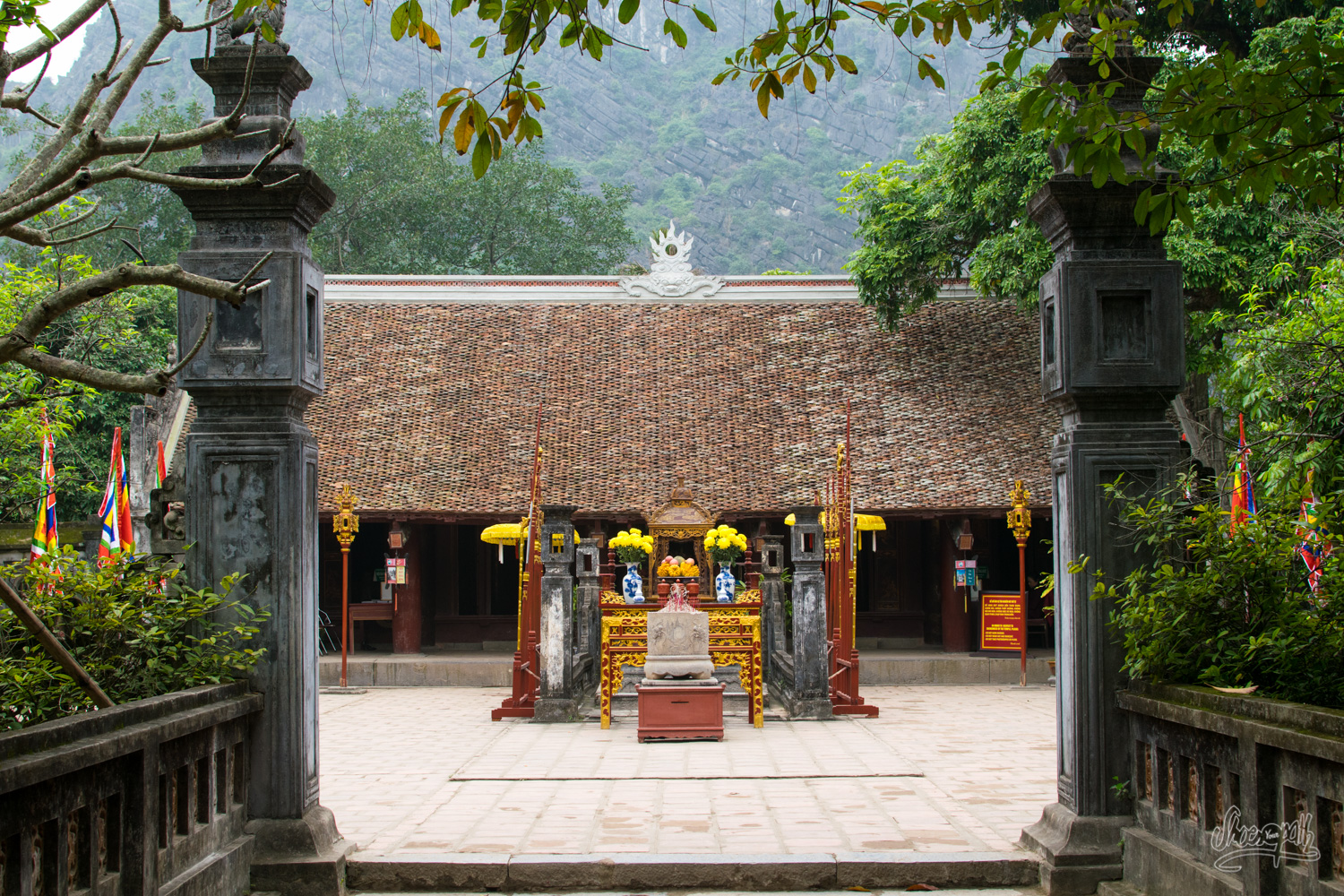
Travel experiences at Halong Bay

For those who plan to visit Halong Bay, this trip will of make you excited and thrilled. But many do not know what to prepare, so here is a list for those who need some guidance.

1. When to go to Halong Bay?
Halong Bay is located in Northern Vietnam so there are 4 seasons. In winter (from November to March), it is cold, while in summer (April to October), it is very hot.
Thanks to this typical climate, you can visit Halong Bay anytime. For Vietnamese tourists, the most favorable period is in summer (April to October). But foreign tourists prefer to go there in winter.

Summer is the busiest season to travel in Halong Bay. It is ideal to leave during the following periods: from March to May and from August to October. Avoid going in June and July. The reasons are numerous:
• During these two months, especially at weekends, there are so many tourists and the price of tourist services gets higher.
• This is the period when the climate becomes bad because of the storms. We must visit Halong Bay before these two months (March to May) or after this period (August to October).
• If you have to go in June or July, we advise you to book a tour organised by the travel agencies because they know how to avoid the two limits above.

2. What to bring in the luggage?
In summer, Halong Bay is similar to other beaches. It’s hot and sunny. So, for girls, sunscreen (with SPF at least 30) is an indispensable item to avoid getting sunburnt.
And for nature lovers, you have to wear sunglasses and a hat to fight against the heat.
During the visit of the famous caves, one can also bathe. A good pair of sandals or sneakers is the best choice (because you will walk a lot). To swim, the swimsuit is essential. But if you forget it or can not prepare it, do not worry! On the beaches, they offer the service of borrowing one. The price is reasonable: from 20,000VND to 50,000VND. If your children are with you, also bring the lifejacket.

3. Transport
Depending on your budget and taste, there are different ways to get to Halong Bay. From Ho Chi Minh City, you can catch the direct train to Hanoi, then go to Halong City by bus. Another way is to book a bus ticket for the Ho Chi Minh – Hai Phong route, then to Halong. Both of these ways cost little money but take a long time to get around. To save time, it is ideal to take a flight to the destination of Hanoi or Hai Phong.

This beautiful bay is 170 km from Hanoi and takes about 3 – 4 hours of driving. The Hoang Long Express Express Bus (found at Kim Ma Station, Nguyen Thai Hoc Street) is recommended. A bus arrives every 15 minutes. In addition, at the Long Bien station, My Dinh or Gia Lam, there are many good quality buses to Halong. Regarding the train, that of the route Hanoi – Halong leaves at 4:55 at Yen Vien station every day.
The bus price to go from Hanoi to Halong is 60,000VND. To move between the bus station and the Bai Chay tourist site, the motorcycle price is around 15,000VND per person; to reach Hon Gai, the price rises to 40,000VND per person. A taxi is recommended if you are a group of three or more. A bus ticket from the resort to Hon Gai or Bai Chay costs just 5,000VND maximum.

4. The hotels
In the Bai Chay tourist site, many 3 and 4 star hotels are emerging. For a 3-star room, the price of a day is at least 474,000 VND per day. The price drops a little at the beginning and the middle of the week. During the last three days, tourists are numerous. So the price is higher and it is difficult to find a room. Plus, booking at hostels with the price of 150,000VND per day is also a good choice.

5. Cruise on Halong Bay
Vietnamese tourists prefer cruises that offer the chance to spend the night on the junk. Many activities that can be done: admire dawn and dusk, participate in kayak races, dive into the bay, do a karaoke night, fish cuttlefish at night, etc.

6. What to eat?

Regarding the culinary aspect in Halong, there are popular restaurants and also luxury restaurants. To taste the seafood: Sea Food Restaurant (Ha Long Street); Thu Huong Restaurant (Ha Long Street); Noi Nho Restaurant (Tran Hung Đao Street);

7. How to move? What to visit?
To travel in the city, taxi is a common way to get around. The famous taxi agencies are: Taxi 886 – Mong Cai (033. 886 886); Ha Long (033 62 62 62); Hon Gai (033 84 84 84); Mai Linh (033. 628 628).

The prices to rent a boat vary according to the weather and the type of boat. If you are a group of 10 to 16 people, a small boat is recommended. If you are alone or a small group, ask the hotel’s receptionists to reserve a seat for you. The ticket to the bay costs 40,000VND per person. If you spend 6 hours, the price of boats is 100,000VND per person. Early morning or afternoon tours are recommended.

8. Distraction
Discovering the bay by boat is an essential activity when visiting the city of Halong. During long cruises, we will visit many caves. While during short cruises, one only explores the famous squares. We have to go early in the morning to avoid the heat. Short cruises are recommended for tourists for health reasons, especially for children and the elderly.

Exploring Tuan Chau Island is also interesting. If you are alone, take the bike. If you are in a group, call a taxi. There, it emerges a clean beach where you can swim. In the morning and evening, many events are organised such as the whale show and the musical show on the water. The ticket price is around 80,000VND. It is a destination not to be missed.

In the evening, a cyclo race (for one or two people) or a horse race (for many people) is perfect to discover the Bay Chay tourist site. The first costs 100,000VND / one hour. The price of the second rises to 200,000VND / one hour.

Another destination not to be missed is the Bai Chay Bridge. To get there, you have to buy a lift ticket (40,000VND) that takes you to Bai Chay Bridge. In the evening, we have the chance to admire the picturesque landscapes below. This will give you unforgettable moments.

Another thing to experiment: the Nu Hoang cable car and the giant wheel Sun World. Here the price is: 300,000VND / ticket for adults, 200,000VND / a child ticket (measured from 1m to 1m3), ticket for children measured less than 1m is free. The price above includes the price of the cable car, the Sun World wheel ticket and the Ba Deo hill ticket.

9. What to watch out for

Before buying something, it is necessary to test the weight.
On junks, avoid carrying food because you will have to pay the price of service.
Never throw garbage
Respect safety rights on junks or beaches to have a memorable trip.

Halong Bay on private junk

Halong Bay is in the north of the country, about 3:30 from Hanoi bus. It is an immense expanse of rock formations with so-called sugar loaves and limestone islands. There are almost 2000 islands and islets scattered on this bay. Halong Bay is a true wonder of the world. Its beauty earned it a UNESCO World Heritage designation in 1994. Most of these islets are uninhabited. With the circuit of the Halong Bay junk, there are also some mysterious caves like the famous Hang Sửng Sốt, also called Cave of the Surprise.

DISCOVER HA LONG BAY

More than a thousand people live in Ha Long Bay, on small floating villages with blue or green houses. They live off of fishing, but also from tourism. Young and old alike will welcome you with a smile. To be aware of this incredible beauty, one must stay there for at least one night, aboard a junk. It’s an unforgettable experience. There are plenty of activities to do on the bay: swimming and walking on Cat Ba beach or Ti Top, discovering caves by kayak, boat ride, fishing, hiking (on Cat Ba Island), etc, or just listen to the sound of water, birds, quietly lying on a deckchair of the upper deck of a pretty junk. The next morning, get up early and admire the sunrise over the bay: it is magical and you feel alone in the world.

SLEEP ON A TRADITIONAL JUNK, AN UNFORGETTABLE EXPERIENCE

Enjoy your visit to Ha Long Bay and spend the night aboard a traditional junk. It’s an unforgettable trip. Sleeping in Halong Bay remains one of the most beautiful travel memories. Wake up in the morning and find yourself alone or almost in the middle of many karst peaks and the Vietnamese fishermen as they go on with their day-to-day life.

TIPS AND PRACTICAL INFORMATION

– It is possible to go on a cruise for the day but it would be a shame not to spend the night.
You can book your cruise to Ha Long Bay via travel agencies but it will cost you more than if you book directly in Hanoi with local agencies. Count with at least 120 euros per night and per person.
– There are different categories of junks (superior, deluxe, super deluxe, private that will obviously affect the price of the cruise. You choose according to your budget, your desires and the itinerary you want to do.
– All cruises offer excursions and activities: visit caves, beaches, sports activities.
– If you plan to visit the island of Cat Ba, plan to stay at least 3 days on Ha Long bay to enjoy each place without hurry.

Halong Bay and Cat Ba Island

The first tourist site in the northeast of the country, Halong Bay attracts a steady stream of visitors throughout the year. In February, March and April, often cold and foggy weather, which favors fog and reduces visibility, affects Halong Bay and Cat Ba Island. Nevertheless, temperatures rarely drop below 10 degrees. During the summer months, tropical storms are common.

Halong Bay, the majestic seascape of steep karst towers rising tens of meters above the jade green water of Halong Bay is a marvel not to be missed. Nearly 2,000 islands dot this 1,553 square kilometer subdivision of the Gulf of Tonkin. In 1994, Unesco inscribed 434 square kilometers of the bay among the sites of the Heritage of Humanity. In addition to the breathtaking views, visitors can explore countless caves (some of which are superbly illuminated).

According to legend, the bay was formed when a dragon plunged into the sea by whipping its tail, breaking up the region into a vast archipelago (Ha Long translates to “descending dragon”). However, the geologists version is different. Over the last five hundred million years, the landscape has produced a series of towers, or fenglin, and ridges of conical peak rocks, or fengcong. At the same time, the coming and going of the tides has slashed their karstic base, giving these primitive expressions of the rock a faltering appearance. In 2000, UNESCO re-inscribed Ha Long Bay as a World Heritage Site, considering that its unique geomorphology was worthy of being preserved by mankind. Men first appeared in the area nearly 25,000 years ago, and several cultures – those of Soi Nhu, Cai Be and Ha Long – flourished in prehistory.

Discovery of Halong Bay

The best way to discover the bay is to go from Along, a town separated in two by an arm of the sea and united by an impressive suspension bridge. The bay is also accessible from Cat Ba. Although it is an island in the bay, it is so vast that it can be considered separately.
It is important to spend as much time as possible on a boat in the middle of a landscape as fantastic as it is irreplaceable. Many travelers make a day boat trip to the bay. For a richer experience, you can take a night cruise aboard the junks or, for more authenticity, a ride aboard one of the junks moored at Bai Chay.

Twilight on the bay

While eagles seem as widespread as butterflies on the island, the langurs and other small monkeys of the islands are more ferocious. But wildlife is not the main curiosity of Halong Bay. We come here for the fantastic karstic reliefs with stunted vegetation, fashioned during the geological eras in the shape of swans, kettles, toads, saddles, monsters, scented burners and other things. The most spectacular towers are so much higher than wide. But what is extraordinary, more than the individual formations, are these karstic reliefs seen from a distance – like a line blocking the horizon or like the limits of the panorama, standing on all sides, like the walls of an arena.

Sightseeing

Excursions leave plenty of time for contemplation. In recent years, cruises offer many more stops, so we must learn routes to discover less known places. Whichever route you choose, you must visit the Hang Sung Sot (Cave of Surprises), the most beautiful of the innumerable caves of the bay. It was opened to tourists in 1995, but the French have preceded the others in the early twentieth century, as evidenced by graffiti painted or engraved in limestone.
A path allows to walk 800 meters in the cave of 12 000 square meters, crossing the three rooms each larger than the previous one. Fantastic stalagmites and stalactites take on the usual aspects – turtles, junk sails, monkeys, happy Buddhas and molar roots.
The Hang Thien Cung (Cave of the Heavenly Palace) competes with Sung Sot for the title of the most beautiful Grotto. In the Hang Dau Go, Tran Hung Dao, the 13th century warrior hero, stocked the famous iron-crowned stakes that he was going to use to disembowel the Mongol fleet.

View of Titop Island

In Hang Luon, canoes or kayaks venture under a low passage to reach a majestic lagoon, whose water is home to some of the most beautiful coral gardens in the bay. The corrosive influence of salt water has also hollowed out six lagoons in the island of Dau Be. In the island of Than Tho, where flying squirrels roam the slopes covered with anarchic vegetation and where monkeys hoot from invisible perches, legend has it that two upset lovers drowned rather than accept arranged marriages. Their act of love impregnated these waters with a magical power and once, only individuals of royal blood could bathe there.

Although the beaches do not form naturally on these karstic islands, one can still enjoy swimming, because the salinity of the water allows to float easily. The depth varies from 8 to 12 meters. Ladders, at the stern of most boats, allow to bathe; and sometimes the bravest are encouraged to dive from the roof of the boat.

Cat Ba Island

The national park of this karst island in the south of Halong Bay is called Cat Ba. Originally a fishing village, the village turned to tourism. Hotels line the waterfront. You can go around the bay by boat from Cat Ba, but the boats leave mainly from Along.
From the town of Cat Ba, an asphalt road runs through a narrow panoramic valley in the mountainous interior. Just after Hai Son, a staircase leads to the spacious Quan Y cave. In 1960, the Vietnamese and the Chinese joined forces to build a concrete hospital. The guardian, a 70-year-old veteran named Vu Dinh Khoi, worked there for ten years and now guides visitors.

Quan Y is the most interesting of the many limestone caves that dot the Cat Ba National Park, a natural reserve of 9,800 hectares covering almost one third of the island. The rugged hills of up to 300 meters are home to the last colony of golden-headed langurs in the world.
The entrance to the park is located on the main north track of Cat ba. From there, a path leads to the summit of Ngu Lam, (200 meters) where an observation tower allows to discover a panorama of the park. A 4-hour hike along the Frog Lake leads to the village of Viet Hai, from where a ferry brings you back to Cat Ba.

Halong Bay, Bai Tu Long Bay and Lan Ha Bay

Located in the south-east of Halong Bay, Lan Ha Bay is part of the Cat Ba Archipelago. The shape of a circle whose back turns to the gulf of Tonkin has about 400 islands. Compared to her two sisters (Halong and Bai Tu Long), Lan Ha is the smallest. Yet this pretty bay has its own charm.

Although it is right next to Halong Bay and Cat Ba Island, the most visited sites, this bay keeps it authentic. Hundreds of small beaches of white and yellow sand that disperse throughout the bay are still uncrowded. Tourists come there to find tranquility by lying on the small quiet beaches covered with the sublime and transparent water, while cruising or kayaking around its limestone mountains.

When people think about traveling in Vietnam, a cruise to Halong Bay comes to everyone’s mind. Halong Bay, Hanoi, Sapa and Ninh Binh are the places in North Vietnam which attracts the most visitors. But when looking for information for the trip to Vietnam, some have found that one can make cruises to Halong Bay, Bai Tu Long Bay and Lan Ha Bay too.

Location of Halong Bay, Bai Tu Long Bay and Lan Ha Bay

Few boats sail in Bai Tu Long Bay, because the bay is further away from the ports. It takes more fuel and more money. Halong Bay is located closest to Halong City. Bai Tu Long Bay is further away, and to enter this bay, boats must pass through part of Halong Bay. Lan Ha Bay is accessible from Cat Ba Island, or a 3 day 2 night Halong cruise can also take you to Lan Ha Bay.

Landscapes of Halong Bay, Bai Tu Long Bay and Lan Ha Bay

The landscape of all these bays is marked by karstic islands emerging on the turquoise water. The landscapes of these bays are similar. A multitude of islands and islets are concentrated in Halong Bay (1,969 islands and islets). Bai Tu Long Bay and Lan Ha Bay also have hundreds of islands and islets each.

The particularity of these bays is their multitude of rocky peaks, the largest marine karst in the world. You can visit any bay, they are all beautiful and worth a visit.

A less touristic cruise in Halong?

Because Halong Bay is closer to Halong City and many of the islands and islets here are concentrated, most boats offer cruises to Halong Bay. Cruises during the day often take you to visit the Thien Cung and Dau Go caves and the boats can not go further. A cruise for a day is not recommended. Imagine, you will spend 8 hours on the road (round trip) and then, 4-6 hours by boat to cross some islands and visit some caves. The bay is worth more than that.

If you have more time, a 3-day, 2-night cruise is recommended, but if you have to spend time at other sites, a 2-day, 1-night cruise is sufficient. After 4 hours drive, you arrive at one of 4 boarding ports around noon.

What to see and do in Halong Bay, Bai Tu Long Bay and Lan Ha Bay?

+ The landscape is picturesque. Enjoy the breathtaking scenery on the deck of a night junk and enjoy a drink
+ Kayaking trips to discover islets and circuses. Kayaking trips are feasible in Halong Bay, Bai Tu Long Bay and Lan Ha Bay
+ Swim in turquoise water. Note that the sea is not swimmable during winter: late October – March
+ Visit a cave or a floating fishing village.
+ To make their cruises more interesting, several boats also offer other activities: cooking classes, Tai Chi, culinary demonstration, spa & beauty service.

Tam Coc or the terrestrial Halong Bay

Tam Coc or Halong Bay

Tam Coc is nicknamed “Halong Bay on Land” because of the similarity of its mountainous landscapes to those of the famous Halong Bay. It is located in the Ninh Binh province about a hundred kilometers south of Hanoi. Tam Coc (which means in Vietnamese “three caves”) is one of the most beautiful sites in North Vietnam and is therefore a must-see destination.

Taking a tour in Tam Coc lasts about 3 hours and can only be done in small sampans on the Ngo Dong River, zigzagging through enchanting landscapes. From the pier called Van Lam to the third cave, the sampan sails in the middle of huge limestone islands.

During your walk you can admire natural landscapes and see goats raised in nature and whose meat is one of the best specialties of the province.

After your peaceful boat ride, do not hesitate to climb the 450 steps to access the dance cave, Hang Mua, which will offer you a breathtaking view of the karst landscapes of Tam Coc.
The essential activities
+ Take a boat trip, 3 sites are available to you: Tam Coc, Trang An and Van Long
+ Bike or scooter ride in the beautiful countryside around Tam Coc
+ Fishermen confirmed or amateurs, know that fishing is possible in the region!
+ Walk to Thung Nham, the alternative to the Tam Coc crowd
+ Visit the many temples and pagodas around

Cuc Phuong National Park

For nature lovers, Cuc Phuong National Park is a must-see destination. Also located in Ninh Binh province, not far from Tam Coc, Cuc Phuong is Vietnam’s first national park and largest natural reserve due to its landscapes and ecological diversity.

Walking around the countryside and admiring the dense vegetation of more than 2,000 species of plants, trees and flowers is the main activity here. Different hikes are offered and the shortest is about 8 km. You can see millennia trees such as Cho Chi; a unique tree in the world. It is also possible to visit some Muong villages that have settled in the park, especially the Kanh Village. Also, be sure to visit Nguoi Xua and Hang Dan Caves, and visit the hot springs where you can swim.

Finally, at the entrance, you can stop at the Center for Assistance to Primates at Risk. The goal is to improve the fate of the monkeys on the Vietnamese territory. Thus, animals of more than 20 species are treated and can be observed.

Visit the magical site of Halong Bay

Declared a UNESCO World Heritage Site in 1994, Ha Long Bay is one of the most fascinating natural attractions of Vietnam. Halong Bay is located in the Gulf of Tonkin, within the province of Quang Ninh, and is famous for the thousands of limestone islands and islets. Halong City is the main gateway to the wonders of the bay, although in recent years an increasing number of tourists prefer to stop at Cat Ba, from which it is convenient to plan excursions to the less crowded Lan Ha bay.

In the Vietnamese language Halong literally means “where the dragon descends into the sea”, as according to an ancient legend which says that a large dragon inhabited the surrounding mountains.

The beauty of the bay is dazzling. To explore it, you need to rent a boat, the only vehicle that can easily move around the islands and caves. The largest cave is Hang Dau Go which was discovered by a group of Frenchmen in the 19th century; inside, as indeed in almost all the caves of the bay, there are plenty of rock concretions such as stalagmites and stalactites, not to mention the frescoed walls during the nineteenth century. The nearby is part of the same complex Hang Thien Cung, known for the presence of rocky massifs that, unlike normal stalactites and stalagmites, have a sweeter, rounded shape. Another popular cave is the Hang Sung Sot, consisting of large cavities, one of which contains a large phallic rock considered a symbol of fertility. Finally, among the best known, there is the Hang Trong (Cave of the Drums), named this way because of the sound generated by the channeling of the wind which in some ways sound similar to the rumble of drums in the distance.

Almost all the islands are not uninhabited and only some of them have modest floating villages of fishermen. The only two occupied by permanent settlements of a certain size are Tuan Chau, both with services and tourist facilities such as hotels, bars and restaurants.

The climate of the bay is clearly divided between a long, hot and rainy summer and a dry and moderately cool winter. The coldest period is between the months of February and April, when the average temperature is around 15 degrees, while in summer it is often over 30. It may also occur unexpectedly tropical storms during this season, and although they are short, they’re often intense. However, there’s no bad season to visit Halong Bay.

Why choose Tu Long and Quan Lan Island?

Halong Bay: Why choose Tu Long and Quan Lan Island or Lan Ha and Cat Ba Island?

But why choose Tu Long and Quan Lan Island rather than Halong Bay, world famous, and acclaimed as a must-visit site in Vietnam and certainly one of the most visited sites in the world? Halong Bay is indeed, but there are alternative ways to experience this region. If you want to see a bay similar to that of Halong, but without the crowds and the tourist frenzy, we recommend the island of Quan Lan with the Bay of Bai Tu Long or the island of Cat Ba with Lan Ha Bay. Tu Long Bay and Quan Lan Island, along with Lan Ha Island and Cat Ba Island, are not well  known places and are mostly visited by local tourists.

The peak season for visiting this site is between April and August. Between September and March, there are still some beautiful days, the island is almost empty of tourists.

If you are looking for authenticity, you will love it here. To go there is not complicated and you will be with the locals. Seeing island life off-season is like seeing everyday life on one of the most beautiful islands in Vietnam. Live at the pace of locals, have the chance to experience the lives of the Vietnamese people in a magical setting.

Elected by local and foreign tourists, the paradisiacal beaches of Quan Lan are among the most beautiful in Vietnam and remain totally unspoiled by mass tourism (no ugly buildings, no touts, etc.). Depending on the period, there is a good chance that you are alone to enjoy the beach.

Learn the life of Vietnamese fishermen, Quan Lan being an island of fishermen. Given the few foreign tourists visiting the island at the moment, they are very accessible. The kindness of the inhabitants of the island, still delighted to receive foreign tourists at home, will make you want to stay for longer.

To do and see on the island

The 02 villages of Quan Lan and Minh Chau.

Quan Lan’s small market.

The fishing ports south and north.

The heavenly beaches of the east of the island.

Rent a canoe or jetski on site.

Enjoy beautiful sunsets west of the island.

Enjoy the landscapes of the west with its mangroves and karstic islands.

Relax, eat fish and shellfish (hand fishing is practiced by locals)

Read a good book

The crossing in Tu Long Bay, Lan Ha Bay and a stay on Quan Lan Island and Catba Island are really a nice alternative to Halong Bay!

The best season for a cruise in Halong Bay

Halong Bay is located in the Gulf of Tonkin in northern Vietnam. 1969 karst islands and islets lies here and form a real postcard landscape. These unparalleled rock formations have earned it World Heritage status. Essential during a trip to Vietnam, it is also one of the most popular tourist attractions. Halong Bay can be visited around a cruise.

A cruise on Halong Bay

Limestone islands, mountains, rocky capes, emerald green water… Halong Bay is truly a wonder of nature. It is not for nothing that thousands of tourists flock to the region every year. A cruise on the bay promises to be both relaxing, enjoyable and peaceful. But several activities are also included in the planning of each day: between the visits of caves and rock formations, where you will have the opportunity to admire the beauty of the stalagmites illuminated by your lamps, you will also be able to learn a little more about the history and myths of the region. Swimming and escape in the nature, during which you can be accompanied by guides, will also be waiting for you during your cruise. But you can also enjoy the sun and sunbathe aboard your boat. In some Halong cruises, you can even meet local fishermen on a kayak, which is already a wonderful experience in itself, or discover the region at your own pace. Hiking and trekking will allow you to discover the bay from the top of the highest point of the islands, but the tour will be according to the tour operator for which you will have opted. Dozens of junks and private boats can also be rented on the wharves, but do not consider this option unless you have a good sense of bargaining and understand the Vietnamese. But it is still the best way to discover the bay away from the horde of tourists who come every day in number.

When to cruise on the bay

Although it is possible to visit Halong Bay throughout the year, spring and fall are the best seasons to go on a cruise. Between the months of March and May, the sun will be constantly shining. If you plan to visit northern Vietnam between the months of July and October, the storms are many at this time of year and it may compromise your plans. From September, the temperature will be fresher. Similarly, if you opt for a cruise between August and November, be aware that risks of typhoons are not excluded. But of course, until the bad weather passes, choose an alternative solution for example by sleeping in the hotel, if your budget allows you to make a small gap of one or two nights. But as mentioned before, there is no perfect time to go on a cruise in this part of Vietnam. The weather can change quickly. It may rain one day and be sunny the next. If you leave during the rainy season, you will have the chance to avoid the layers of mist. Despite these minor inconveniences, Vietnam remains a beautiful country and Halong Bay a wonderful place that is definitely worth a visit.

Recommended sites in Halong Bay

Recommended sites in Halong Bay

Vietnam is known not only as a country with varied culture and long-lasting history with long years of revolution, but is also known for its scenic tourist destinations and many “World Cultural Heritage” sites by UNESCO. These sites attract each year Vietnamese tourists and also foreign visitors. One of the must-see landscapes of Vietnam is Halong Bay.

Halong Bay is a body of water in the province of Quang Ninh in northern Vietnam. Its area is about 1553 km². There are 1969 islands and islets, especially limestone islands. For Vietnamese, this wonderful site is considered a gift of nature offered in Vietnam.

Many caves with bizarre shapes are valuable works that no architect can create. For this reason, foreign tourists visiting Vietnam often prefer Halong Bay for visiting and vacationing there. Although Halong Bay is shaped by geographical and climatic advantages, the Vietnamese still tell a mysterious legend of Halong Bay.

Legend has it that the birth of Halong Bay is linked to the historical myth of the Vietnamese descendants of dragons. Once upon a time, the enemies arrived in Vietnam by the marine route to invade the country. Not supporting this situation, the Jade Emperor sent a dragon and her children to the sea areas to help the people defend the country. When the ships of the enemy entered the country, the dragons spit fire and burned them. The invaders were frightened and saved themselves. But the dragons rejected the pearls to sink the boats and kill the enemies. After destroying all the invaders, the dragons decided to live in this region to protect the Vietnamese. The place where the mother of the dragons came down is now called Halong Bay. Little Dragon Square is known as Bai Tu Long Bay. And the place where the dragon tail is, is called the island of Bach Long Vi. The Vietnamese often name sites thanks to myths and traditional tales to show their special culture.

Halong Bay is home to many islands and islets, and also famous caves like Sung Sot Cave. It is named this because its landscapes is so grandiose and amazing, and astonishes all tourists. This cave ripples through the cliffs. Today, in order to develop tourism, lamps have been attached to the cave, which carry not only light but also beauty. There are other caves too, such as the cave of Thien Cung, the cave of Dau Go, the cave of Trinh Nu, the cave of Bo Nau, and more.

The limestone rocks of Halong Bay are well known for their typical beauty (such as Trong Mai Island, Tuan Chau Island, Ngoc Vung Island, Ti Top Island, Islet Island, Con Coc, etc.). These attractive places are all linked to an interesting story. Halong Bay also has beautiful blue and clear water beaches where tourists can dive, relax and enjoy water sports such as swimming.

Halong Bay is named a world cultural heritage, one of the 9 most beautiful sites in the world. She is the pride of the Vietnamese. On arrival, tourists not only have the chance to travel and discover the monuments but also taste the specialties of the city of Quang Ninh and explore the typical culture there.

Kayaking in Halong Bay

Whether single or double boat, visitors can easily explore the beautiful scenery of Halong Bay on these small boats. If kayak swimming was once known as a Western sport, it has now become a popular choice of Vietnamese tourists when visiting Halong Bay. Don’t miss the chance do go kayaking in Halong Bay.

The kayak was first used by the Eskimos for hunting and fishing. Thanks to the compact shape, the kayak can discreetly approach the prey from behind. This makes hunting easier. In the middle of the 19th century, kayaking was established in Europe and America, and then gradually became a professional and popular sport.

Previously, kayak was considered a risky sport for Westerners who prefer adventure. When introduced to Vietnam, kayaking was much simplified to become more friendly for tourists. Whether single or double boat, visitors can still easily explore the beautiful scenery of Halong Bay on these small boats.

Halong Bay has been voted by National Geographic magazine as one of the top 25 swimming tourist destinations in the world. The flat relief and few waves of the bay create the great conditions for kayaking.

On this boat, you can glide across the rocks to explore the romantic scene of the bay, or visit the fishing villages or relax on the peaceful beaches. This experience will give you an insight to the beauty of Halong Bay and be closer to the grand nature.

All the reasons to include Halong Bay on your bucketlist

Going to discover Vietnam without even sailing the waters of Halong Bay? Unthinkable! This beautiful bay has been rightly proclaimed a World Heritage by UNESCO. There is no doubt that this magical place will generate exceptional photos and will remain engraved in your memory for a long time.

Since 2012, Halong Bay has been on the list of 7 new wonders of nature. No need to specify that this is something out of the ordinary. You cannot miss it under any circumstances during your trip to Vietnam.

“Halong” means ‘dragon descending into the sea’. It is true that the rocks protruding from the water resemble the scales of a gigantic dragon. Many of these small islands are uninhabited. Most people live off fishing and never reach the mainland.

The rocks are made of limestone, and as you may know, limestone is subject to erosion. This is how many underground caves and lakes have appeared over the centuries.

5 must do’s in Halong Bay

A cruise through the bay
Let’s start with the most obvious: a cruise across the bay. You will not be alone, but it’s a must. An experience you are not about to forget, even if you sometimes have to be able to ignore other boats. There are all kinds of different boats, with the possibility of sleeping on board. There are also private boats.
Visit the floating villages
The bay is full of floating villages. Ba Hang and Cua Van are undoubtedly the best known. The inhabitants literally live on and around the water.
Explore Cat Ba
The largest island in Halong Bay is Cat Ba. It is adventurous to say the least: with its dense jungle, it is also a very wild island. The village of Cat Ba is a bit more crowded, but the rest of the island is mostly made up of nature.
A breakaway in Lan Ha Bay
Smaller, less well known, but also beautiful. Lan Ha Bay is less touristy, but that is precisely its advantage.

A tour to Halong Bay or Lan Ha

On the island of Cat Ba in Vietnam, almost all the hotels, and of course the agencies in front of the harbor, propose an excursion on Ha Long Bay via the bay of Lan Ha. There are several types of packages to choose from and you can easily find what you’re looking for, from half-day sea trips to Lan Ha Bay for a day, or even sleeping on an island.

The Amazing Bay of Lan Ha and Halong

Halong Bay or that of Lan Ha is very similar to El Nido in the Philippines. Here we find the same karst peaks that spring out of the water, the same type of vegetation on these sharp rocks. The water becomes almost transparent and at times it’s like being in the Philippines or on an island in Thailand. What makes the charm of this boat trip are the stops on the islands like Monkey Island, but there are also the incredible floating villages of the fishermen.

Choose Your Excursion

The cruise departures are usually at 8am and the return around 5pm. But if you want something more private, you can also rent a junk or a private boat to enjoy the places in couple or with friends.

Monkey Island

One of the main stops the cruises does is the island of Monkey Island. On this island you may have the chance to meet a monkey on the beach. Here the water is almost transparent when arriving by boat. After a short break on the beach, the groups of tourists are taken to the top of the hill, by doing a hike up. From there, you have a magnificent view of the whole bay, for tens of kilometers around!

Van Hoi Beach

Another stop will be on a tiny island, with its small beach. The boat stops for everyone to dive from the boat, and from there some can swim to the island.

The Fishing Villages

The fishing villages are apparently more numerous in Lan Ha Bay than in Halong Bay. It is true that during the cruise, you cross many floating villages, and their way of life is quite impressive. The karstic peaks all around favor a calm and fishy water for villagers who can thus put their houses on floats without danger. As we have seen, it is possible for tourists to stop and sleep in these villages.

A magical site in Vietnam

Halong Bay, bordering the waters of the Gulf of Tonkin, is one of the most visited tourist sites in Vietnam. This huge bay with a bewitching atmosphere has been listed since 1994 on the UNESCO World Heritage List. Here is a small practical guide to prepare your visit to this essential site.

A spooky landscape

Nestled at the bottom of the Gulf of Tonkin, just a hundred miles east of Hanoi, Halong Bay is a maze of more than one thousand six hundred islands and islets. The majority are simple pillars of limestone, but they compose an unreal scenery where the mountains seem to float on the surface of the water. The illusion is all the more striking when the site is covered with mist, which is common in this part of Vietnam. According to legend, a dragon descended from the mountain and dug valleys and crevasses to create this landscape out of the ordinary, a real labyrinth of water and rock. This water-worthy panorama is today one of the most visited tourist sites in the country. The inhabitants of the bay, who live in floating villages, abandon fishing more and more for trade with tourists.

Cruises for all budgets

Although its land is worth the detour, Halong Bay is usually visited over water. Tens of junks silently crisscross this huge archipelago, taking their passengers to discover this breathtaking site. Depending on the budget you have, you can choose between several options, ranging from the simple day without night on board, to the cruise of 3 days and 2 nights. If you only opt for the day cruise, it only allows you to get a glimpse of this World Heritage Site. It is therefore better to choose a longer cruise to soak up the atmosphere of the bay. It is also possible to associate a cruise with a stay on the island of Cat Ba, the largest island in the bay. Since 1996, it has been a protected nature park. You can see tropical forest landscapes bordering mangroves and cliffs. From Cat Ba, it is also easy to reach the bay of Lan Ha, with crystal clear water, hemmed in by the most beautiful beaches in the region.

Caves to visit

Many caves cut into the islands of Halong Bay. This bay is indeed one of the largest karst sites in the world. Among the most beautiful caves to admire, there is:
=> the Cave of Surprise (Hang Sung Sot)
=> Hang Thien Cung, famous for its concretions
=> Hang Do Go nicknamed the Cave of Wonders for its beautiful stalactites

Practical information

The best time to visit Halong Bay is March, April, May, October and November. The period from June to August is not recommended because of the heat and the risk of storms in the Gulf of Tonkin. The sometimes foggy weather between February and April reinforces the mysterious side of the site. To get there, the closest airport is Hanoi. Then you have to drive three hours by car or minibus to reach the bay.

Halong Bay and its secrets

Halong Bay is one of the places that fascinates travellers the most and where everyone wants to go. We encourage every traveller to visit this part of Vietnam.

First of all, what is Halong Bay? It is simply an enormous body of water with nearly 2000 islands located in Quang Ninh province, and is a UNESCO World Heritage.

“Ha Long” means “descent of the dragon” because the legend says that this particular form is due to a dragon. The dragon is a sacred animal in Vietnam. Legend has it that a dragon family was sent by the Gods to protect its inhabitants from the invaders. In place of the fire, they spat jewels and jades that would later turn into islands. Following this event, the dragons decided to live in the bay.

From a historical point of view, Halong Bay has been the scene of many naval battles and has been home to many pirates. Halong Bay has been inhabited for more than 4000 years. You will meet fishermen and inhabitants living in floating houses.

What you can do on Halong Bay

One of the main activities of Halong Bay is undoubtedly visiting the caves and cellars. However, many other activities are offered such as kayaking and visiting floating villages. You can spend the night aboard a traditional junk, do tai chi, learn to cook or just enjoy the sunset on the top deck of your junk.

When to visit Halong Bay?

The ideal period to visit Vietnam is March, April, September and October. But do not worry, each time of the year will offer you a different sight of Halong Bay. For a dry experience, go in the months of November to February. For a little more heat, leave between May and August.

The advice of experts

Dedicate at least two days to this part of Vietnam which is full of stories and wonderful landscapes. Enjoy an overnight cruise on Halong Bay during your stay because it is said that in a few years only day cruises will be allowed.

Halong Bay offers visitors a once-in-a-lifetime-experience. You will not find this atmosphere anywhere else in Vietnam.

Halong Bay at the top of the wonders of the world

In the list of beautiful sites and impressive rocks around the world, published by BBC, Halong Bay is in 2nd place behind the famous chain of rocks Fairy Chimneys in Turkey.

The rocks of Fairy Chimneys in Turkey
: these rocks resembling conical pyramids are in the Cappadocia region of Turkey. A few million years ago, the eruption of volcanoes caused the escape of huge ashes and dust everywhere. Over time, the rains and winds erode the relief, revealing the solid layers of earth and basalt stone which formed the gigantic rock chimney.

Halong Bay, Vietnam: the picturesque landscape is adorned by limestone rocks and magnificent caves. The rocks were formed by the rise and fall of the sea, which has been going on for 500 million years. The bay has over 1600 large and small rocks, most of which are deserted.

The eye of the Sahara desert in Mauritania: Located in the vast Sahara desert, it is known as “Richat structure”. It is a vaulted structure 50km in diameter. Initially, scientists interpreted its formation by the meteorite impact, but recent theories claim that this structure was the result of geological erosion over time.

The big blue hole in Belize: the giant blue hole is implicitly under the coast, measuring 320m wide and 125m deep. This is a part of the caye Belize Barrier and Mesoamerican. This hole was formed during the ice ages when huge limestone caves were crumbling as a result of the rising sea level. The stalactites found in them carry a wealth of value in meteorological science.

Moeraki pebbles in New Zealand: scattered on the Koekohe coast in New Zealand, the pebble blocks are similar to the giant turtle shell. They were formed during the sediment processes at the bottom of the sea more than 60 million years ago.

Zhangye Danxia National Geological Park in China: in the distance, the sinuous and successive mountains form a magnificent perspective. This type of relief is the result of the deposit of red sandstones for several million years. The park is an attractive tourist site.

The Moon Valley in Argentina: this site is a real fossil cemetery of the oldest dinosaurs, fish, amphibians, reptiles, and plants. It was formed somewhere between 200 million to 250 million years ago.

The wave rock in Australia: this relief is 14m high and 110m long, located at the Hyden National Park in southern Australia. Its formation was generated by current flows through granite rocks. The traces of color took the source of the deposit of minerals following the rains.

The rock forest in China: the vast sharp rocks are more than 10m high, successively creating a spectacular landscape formed 270 million years ago. Subsequently after the impacts of erosions of wind, air and water, the beautiful site was born. UNESCO has also recognised it as a World Heritage.

The chocolate hills in the Philippines: there are about 1500 rocky hills in the province of Bohol. These hills are covered by green plants, yet in the dry season they change color to black-brown. The local authority has recognised them as the national geological statue.

Titov Island – a small treasure in the heart of Halong Bay

For some people, the name of this island is a bit weird. Indeed, the name was Cat Nang (Cát Nàng in Vietnamese) in the French colonial period. On November 22, 1962, President Ho Chi Minh accompanied Russian astronaut Gherman Titov to visit this beautiful island and after that day he named this island “Titov” to commemorate this event.

Small island with beautiful sea view

Titov would have loved it! Here, the green of the forest bordering the beaches blends perfectly with the intense green of the water. It’s a great place to sunbathe in the sun and dive into the emerald water. Climbing to the top of the mountain is highly recommended for a beautiful view of Halong Bay. The sky, the sea, the boats … It’s so beautiful!

When to go?

April, May, June are the best months to visit Titov Island as well as the rest of Halong Bay. The sky is clear and blue. This is the ideal time for beautiful photos! In the month of July and August, the bay can experience fairly powerful typhoons from the China Sea. Sometimes this climate lasts until October. So this period is less advisable to visit Halong Bay. Towards the end of November until March, winter dominates the bay. It is very cold, especially between December and January. The sky is often gray and foggy. Occasional rains, including drizzle for several days, make Halong Bay really sullen.

To reach Titov Island, take the boat from Halong Pier. This island is wonderful for a stroll for some hours, but if you want to stay, it’s impossible: there is no hotel for tourists. In this case, spending a night on a junk in Halong Bay is a good choice.

Halong Bay, a natural jewel to discover in Vietnam

Halong Bay is one of the most extraordinary natural wonders in Vietnam, or even in the world. Indeed, this vast expanse of water is famous for its emerald waters and its thousands of islands and islets.

Marvel at the distinctive characteristics of this natural wonder

The particularity of Halong Bay is the number of rocky peaks that emerge from the waters. There are more than 1,600 islands and islets in the bay. This creates an incredible seascape. Moreover, it owes its UNESCO World Heritage inscription in 1994 to its karstic islands. In addition, it is ranked on the list of 7 new natural wonders since 2011. The most striking thing about cruising the bay during a circuit in Vietnam is to see the shape of some islands such as: Islet Trông Mái (forming a hen and cock couple), Islet Rông (similar to a dragon dancing at sea), and there are some that have the shape of a head of man and of a sprawling ox. Halong Bay is undoubtedly one of the ideal destinations.

Explore the caves of the bay during a trip to Vietnam

A large number of travellers spending their holidays in Vietnam come to Halong Bay to admire its spectacular panorama. Apart from the islands and islets, the number of caves is also another remarkable property of the bay. Some islets in the bay contain caves, some of which lead to inland lakes. But in order to protect and conserve the natural state of this natural heritage, only a few caves are accessible to visitors. Among the most famous are Sung Sot or Surprise Cave on Bo Hon Island, Cave of Wonders, Dau Go Cave on Woodland Island, Trinh Nu Cave or Virgin Cave. Thien Cung Cave or Heavenly Palace and Kim Quy Cave on Dam Nam Island.

Halong Bay Vietnam Travel

The beauty of the 7th wonder of the world

Halong Bay is located northeast of Vietnam in the Gulf of Tonkin, and is considered one of the most beautiful bays in the world. Halong Bay is recognised as a World Heritage by UNESCO.

A cruise on Ha Long Bay

Halong Bay covers a perimeter of 1500 km2, and has more than 1,600 islands and islets emerging from the mist. The name “Ha Long” means “descent of the dragon”. Legend has it that dragons descended from the sky, sent by the Jade Emperor to help the Vietnamese fight the invader. They spit out thousands of pearls that then turned into islands. When the ships of the enemy arrived, they shattered against the rocks. The Vietnamese emerged victorious from the battle. Most Vietnamese still see Ha Long Bay as the fundamental symbol of nationalism. But they also see, like the many tourists who ply the waters of the bay, a place of exceptional beauty and perhaps one of the most picturesque in the world. The islands of Ha Long Bay were built from a limestone formation between 300 and 350 million years ago. Erosion has carved them, creating multiple “sugar loaf” with vertiginous walls, natural arches, narrow passages, inner bays, a veritable maze where you have to get lost.

Most of the islands are uninhabited and home to a variety of wildlife including terrestrial molluscs, spiders and insects. Most mammals have unfortunately disappeared. A lush tropical forest covers the sloping walls and is home to a variety of plants, such as cycads or orchids. Ha-Long is renowned for its great ecological diversity: mangroves, concentrated corals in the east and south of the bay. 90% of the mangrove was destroyed by the pollution and by the demolition works undertaken to enlarge the space reserved for aquaculture. Corals have also suffered greatly from increased pollution from seabed discharge and sedimentation.

Discovery of Bai Tu Long Bay

Bai Tu Long Bay is located east of the tourist area of ​​Halong Bay, within the maritime zone of Halong City, adjoining the chief town of Câm Pha and the district of CôTô.
In particular, it includes the smaller rocks of Halong Bay, some of which resemble animals such as hippopotamus or elephant, etc.

Boats arrive at Bai Tu Long Bay

On the limestone islands of the bay, there are also karst caves, including the Quan Cave, or Hai Quan cave, where ships used to shelter in case of storms. Other islands or groups of islands known as Cape Ky Nhay, Cape Ky Gia, The Vang, Hong Chong, Hon Vadon, Hon On, Hon Ba Sao, Hon Thien Nga are attractive tourist destinations.

Departing from Ha Long Harbor, after only going 30 minutes by boat, visitors will arrive at a large island where there is a wild beach and a beautiful karst cave. This cave is not very big, but it has lots of interesting stalactites.

Bai Tu Long Bay is home to islands that are home to livestock and agriculture such as Quan Lan, Minh Chau, Ngoc Vung, Dong Chen, The Vang, and Khi Island (Monkey Island).

At Bai Tu Long Bay, in addition to visiting the caves, visitors can also visit the fishing villages, where people raise fish and pearl oysters for pearls. During the tour, tourists can see the technique of making pearls. Visitors can eat and stay on Bai Tu Long Bay.

How to discover Halong Bay

The Halong Bay has many factors that can mesmerise the visitors: the grandeur, its splendid landscapes, composed of more than 2000 islands and karst islands multiform, transparent emerald water, caves located inside the islands full of stalagmites and stalactites make Halong Bay a beautiful site that cannot be found anywhere else.

Halong Bay – a wonder of the world

Halong Bay is located in Quang Ninh Province. Its reputation spread to the world for not only being certified as a World Heritage of Nature admitted by UNESCO, but also its incredible charm that fascinates all travellers, whatever his nationality is. A 2-day Halong Bay cruise or a 3-day Halong Bay cruise will take tourists on an unforgettable journey.

In addition, tourists have the chance to discover the life and daily activities of villagers in the floating villages, take a cruise aboard a traditional boat, admire the splendid beauty of more than 2000 islands emerging on the emerald water and enjoy delicious specialties. Halong Bay is recognised by many tourist companies in the world as one of the most attractive tourist destinations.

Halong Bay is a collection of a diverse system of rocky islands and caves. The islands of Halong Bay are often of two types: limestone and shale. They are mainly located southeast of Bai Tu Long Bay and part of southwest Halong Bay. These features are the result of the geological evolution that includes the advancing sea, the lowering of the earth and the karst erosion. This process of erosion by sea water and wind formed a bay of  an unusual and original landscape that you cannot find anywhere on the planet.

Inside the islands and islets are incredible caves linked to mysterious legends: cave of surprises, cave of the Heavenly Palace, grotto of Wooden Tips, cave of the Virgin, and more.

Interesting activities to do during a Halong Bay cruise:

• Spend unforgettable moments aboard a traditional boat
• Visit floating villages and discover their life
• Enjoy the incredible seafood
• Go kayaking

How to discover Halong Bay?

When travellers arrive in Halong City, they can search for a junk to do the Halong Bay cruise, which is a must-do activity. You can also cruise in a bamboo boat through the fishing villages and go kayaking along the islands in the bay.

Threatened Wonders of Asia: Halong Bay

The tourism industry is not the only element threatening Halong Bay: exploiting the region, rich in mineral resources, coupled with global warming, could also put the site at risk. Three coal-fired power plants and three open-pit mines are within 50 km of the bay. The waste from these mines kills the plankton used to feed the fish, and is therefore a serious problem for the fauna and flora of Ha Long Bay. It also contains traces of arsenic or cadmium, seriously threatening the health of the inhabitants in the long term. In July 2015, torrential rains caused landslides and the death of 14 people in Hạ Long City. The floods directly dumped waste from a nearby coal mine into the sea, directly affecting Halong’s water quality. Tourists found themselves stranded overnight on Co Tho Island, the storm making navigation dangerous.

However, to say that Halong Bay is the victim of an influx of visitors and polluters uncontrolled in a country eager to develop its tourism industry would be a big mistake. Vietnam is one of the most vulnerable countries to climate change. Since Halong is recognised as a world heritage site, the site is the priority of the government of Quang Ninh province, where the authorities are striving to combine tourism development and heritage conservation. The activities of the bay are therefore regulated by numerous decrees and conventions. For example, access to floating villages is limited, so as not to affect people’s lifestyles.

With its 3260 km of coastline, Vietnam will not escape the rising waters. Global warming is directly affecting the country’s economy, and the Vietnamese government was one of the first emerging countries to embark on a long-term struggle. In the first decade of the 2000s, Vietnam took important steps to slow down environmental degradation, promote sustainable development and reduce the risk of natural disasters: resource management, prevention campaigns, education, and disaster preparedness. Climate change has been on the agenda for over 20 years. In 2015, the United Nations, in cooperation with the Vietnamese government, invested $50 million to build infrastructure to counter rising sea levels on the Vietnamese coast. However, it is unlikely that Halong Bay will benefit from this process, as the construction of dikes would alter its raison d’être: a natural landscape with limited human activity. In fact, the bay is not on UNESCO’s List of World Heritage in Danger. The degradation of the site is still very real, and the efforts of the government and the UN to save it from environmental threats seem insufficient in the face of global warming and almost irremediable.

Another problem that IUCN points out is that despite the large number of laws and decrees to regulate activity in Halong Bay, the Vietnamese government has not invested enough in enforcing them. Limiting the number of visitors could be the only long-term solution: with its 5,500 daily tourists, the bay welcomes much more than it should. Eager to take advantage of the potential returns of the tourism industry, the Vietnamese authorities are reluctant to limit investment and the influx of visitors. It is not certain that promoting eco-tourism alone, a drop of water in the ocean, will be enough to preserve the integrity of the bay.

Sail on Halong Bay

Listed in UNESCO since 1994, Halong Bay is the most famous natural site in Vietnam, and perhaps even in Asia! In the Gulf of Tonkin, it stretches over hundreds of km² and is often the highlight of a trip to this region.

About 2000 islands and islets streak on the bay. “Ha Long” means the “descent of the dragon”, because according to legend, a dragon was at the bay. By shearing the mountains with his tail, he would have created this picturesque landscape, before diving into the sea, thus raising the water level. Another legend is that the dragon, once under the sea, would have brought out jade and precious stone depths, which turned into mountains.

The formation of Halong Bay is actually explained by the digging of an old limestone plateau under the effect of torrential rains of this hot and humid tropical climate. The strongest rocks remained, forming the karst peaks we admire today.

Any traveler arriving in North Vietnam for the first time must discover Halong, the atmosphere is unreal! A cruise is a great way to discover the bay. Staying one or two nights aboard a junk or a sampan is an unforgettable experience, and you’ll get the most of this unique seascape. A longer excursion allows to explore sites less frequented by tourists.

The activities are many: diving, kayaking, swimming, and more. Thousands of caves dot the mountains and many are accessible to the public. While most islands are uninhabited, fishing communities have set up villages and floating markets. Some have specialised in jellyfish fishing, appreciated in Vietnam and especially in China.

Halong Bay – UNESCO World Heritage

Halong Bay, a world famous wonder and listed on the UNESCO World Heritage List, is well worth the full visit, even in bad, foggy weather. It is one of the iconic landscapes of the country and for good reason. Located 180km from Hanoi and 67km from Hai Phong in Northeast Vietnam, this wonder of the world has been classified by UNESCO for its exceptional value of site of great biological interest

Things to see and do in Halong Bay

Halong Bay can be seen aboard a traditional floating wooden junk. The legend of Halong Bay tells that a dragon came to live here. When he plunged into it, the water in the bay rose. Hence the origin of the name “Halong” which means “descent of the dragon”. What later gave birth to this amasing landscape of mountains plunged into the ocean.

During your navigation, you will admire its islands of limestone with multiple shapes and unusual names. You can also exploring its caves. There are more than 1,900 karstic islands and coves that make up the largest marine karst in the world.

We also recommend exploring the islands by kayak and go visit the floating fishing villages. In Halong Bay, you can also swim on some authorised areas.

To know before your trip to Halong Bay

The weather in Halong Bay is subject to changes in the climate of northern Vietnam, which alone has four distinct seasons. The best season for a cruise on Halong Bay is between April and November.

Whether traveling with family, lovers or friends, Halong Bay offers unforgettable moments. This is the region to discover during a trip in North Vietnam.

Visit Tam Coc (Halong Bay)

What to do in Halong Bay?

Tam Coc and its caves

Tam Coc, whose literal translation means “the 3 caves” consists of Hang Ca, Hang Giua and Hang Chateau. This landscape was shaped by erosion.

Cycling in the beautiful countryside

Go on a bike trip near the village of Van Lam, to discover the scenes of daily life and see farmers working in the field or watch the limestone peaks.

Boat trips

Hop onboard a boat trip in the “Halong Bay on Land”. For approximately 2.5 hours, you will be able to admire the spectacular karst islands standing in the middle of a green landscape. Visit the 3 caves before returning to the pier.

The many temples and pagodas

The Bich Dong Pagoda (Jade cave or troglodyte pagoda) is considered the most attractive tourist attraction due to its natural beauty that it conceals behind its doors. An architectural work of art perfectly integrated into this natural environment of rare beauty!

Proximity to Hoa Lu, the ancient capital of Vietnam

The city was the capital of the first independent Vietnamese dynasties (968 to 1009), after nearly a thousand years of Chinese rule. It is possible to visit the temple dedicated to Dinh Tien Hoang, founder of the first of these dynasties.

Accommodation in a charming lodge

If you decide to stay in the region for more than a day, charming hotels like Tam Coc Garden, a small ecolodge nestled among rice fields and limestone peaks covered with vegetation, will be a real haven of hospitality and romance.

An essential stop

The geographical location allows you to easily include this destination in your tour in the North and Central region.

At the movie theatre…

The fabulous landscapes of Tam Coc have recently served as a backdrop for the last King Kong movie. Scenes from the film Indochina were also shot in Ninh Bình province.

When to visit Tam Coc?

You can visit the region whenever. However, the best time to travel in the area is between March and October when the rice fields are at their best and has beautiful shades of green.

Discover the bay differently

Halong Bay is well deserving of its nickname jewel of the southern sea of ​​China. It is majestic and will surely bewitch any traveller who discovers it for the first time. Nevertheless, it is suffering from mass tourism. More travellers means more boats and more pollution. So can we still discover Halong Bay in a more appropriate way?

There are 2 extensions of Halong bay that allow you to discover the bay differently, a little further from the crowd: Lan Ha Bay in the South and Bai Tu Long Bay to North-east. The same types of landscapes are found at Bai Tu Bay as at Halong Bay. There are thousands of islands here. Navigating this bay is almost a phantasmagorical experience, an escape into an almost unreal “elsewhere”. This impression of exclusivity is amplified on Bai Tu Long bay because it is much less visited. Only a few companies are currently sailing this route. You will come across some cruises in comparison to hundreds in Halong Bay (about 500 boats sail every day).

In short, we advise you to discover both Halong Bay and take the chance to sail in Bai Tu Long National Park.

Halong Bay – the pearl of Vietnam

About 160 km from the capital Hanoi lies Halong Bay, one of the most beautiful landscapes in Vietnam thanks to its natural caves, picturesque islands and floating fishing villages. Halong Bay also includes about 2000 limestone islands with many karst caves. In Vietnamese, the term “Hạ Long” means “where the dragon descends into the sea”.

Best time to visit Halong Bay

Halong Bay is part of the Gulf of Tonkin where there are four distinct seasons. The climate of this area is similar to that of other regions of northern Vietnam. In winter, it is cold and in summer (from April to October), it is very hot. Each season has its own special charm, so in any season, Halong Bay is an attractive tourist destination for tourists. However, it is better not to go there in mid-November because there are sometimes wind turbines and storms.

Sites not to be missed in Halong Bay

Bai Chay Beach – an attractive tourist destination in Halong

Bai Chay Beach is one of the most beautiful artificial beaches of Vietnam. It is near the coast of Ha Long Bay. While visiting Halong Bay, you cannot miss this beach where there are white sand beaches and crystal clear water. There are many legends about the name of this beach. According to a legend, when a fleet carrying food for the Mongol invaders arrived, Vietnamese troops and locals fired shots. The whole fleet caught on fire. Because of the northeastern wind, the fire was so violent that it burned the forest west of Cua Luc. This place is named “Bai Chay”. Currently, Bai Chay Beach has become a tourist destination thanks to the picturesque beaches and villa areas having luxurious and original architecture. In addition, there are folkloric activities such as water puppet theatre.

The cave of Sung Sot (cave of surprises)

The cave is located on Bo Hon Island. It is one of the most beautiful and widest caves in Halong Bay. When you go up the cave, you’ll see that the path is covered with trees and foliage, and consists of large blocks of paved stone.
Beside the entrance, the rock is shaped like a horse with a long sword. According to legend, after defeating the An aggressors, Thanh Giong (the Holy Giong) helped the people to hunt evil spirits and demons. Then, the Saint Giong flew to the sky, leaving a stone horse and a sword. In the cave there are many different forms of fossil stalactites. With its untouched charm, this cave becomes a must-visit site in Halong Bay.

Cai Bau Pagoda – The famous tourist destination of Halong

The Cai Bau Pagoda is also known as the Truc Monastery Lâm Giác Tâm. Built on the base of the 700-year-old Phuc Linh Tu Pagoda, this pagoda is a historical witness to war against the 13th century Mongolia invaders. This monastery has become an attractive destination for tourists. This pagoda has a typical temple architecture in Vietnam. It is an ideal destination for you to dive into the calm.111

Co To Island

The Co To Archipelago comprises nearly 50 islands of which three of the largest are Co To Island, Thanh Lan Island and Tran Island. Located in Quang Ninh Province, Co To Island is one of the most wonderful islands in the Tonkin Gulf and one of the best destinations in Halong Bay due to its golden sandy beaches.You can explore the forest of Co To Island or discover the unspoiled islands by boat, go fishing or go diving. You also enjoy incredibly tasty seafood.

Bonus tip:

Hoanh Bo rice alcohol

This alcohol was made from a kind of special glutinous rice that you will not find anywhere else. Glutinous rice has been cooked and brewed naturally. After fermentation, people dip special leaves from the Hoanh Bo Forest into the wine jars. This alcohol serves to stimulate digestion. It’s a must-try when you’re in Halong Bay.

Weather in Halong Bay

Halong Bay is a must-see during your trip to Vietnam. If the dates of your tour are not flexible and you do not intend to return to Vietnam, you must make a cruise on Halong Bay. And if you can choose the dates for your holiday in Vietnam, the information below will be useful for you.

Halong Bay is located in northern Vietnam where the climate is poor in February – March and the rainy season lasts from May until the beginning of October. There are months when you do not have good visibility on the bay, and months when the water is cold to swim in the sea.

Halong Bay in April

This is a very good time to visit Halong Bay, especially at the end of the month. The weather is nice, there’s sun and no drizzle or fog and you will have good visibility over Halong Bay. The rainy season hasn’t started yet. At the beginning of the month, the water is still quite cold between 19 and 26 degrees C but you can swim anyway. At the end of the month, temperatures rise to 30-34 degrees C. April is high season for tourists in Vietnam. If you intend to make a private trip tailor-made, you must book early. A cruise on small boats must be booked as soon as possible.

Halong Bay: May – early October

These are the months when it’s really hot, around 30 degrees C, and good for swimming in the sea. You have good visibility. It rains sometimes but it is showers that arrive and leave very quickly for a few hours. Between the end of July and the beginning of October, some typhoons can attack northern Vietnam and cruises can be canceled. In case of cancellation of the cruise, you will be refunded.

Halong Bay: end of October – January

These are the months where you have very good visibility, but the water will be a little cold to swim in, ranging between 11 and 20 degrees C. The winter in northern Vietnam begins in November when the weather becomes gray and a little cold. However, before the Tet holiday, that is to say before February, fog is rare and it’s not a bad time to visit Halong Bay.

Halong Bay: February – March

It’s not a very good time to travel to Halong Bay in these months, and in northern Vietnam in general. The weather is cold and wet. There will be occasional showers, especially in March. Halong Bay is generally covered by a layer of fog and you do not have good visibility. The water is cold for swimming. On the other hand, if you will be lucky, there are also some days when the weather is favourable and it’s sunny.

How to visit Halong Bay

Halong Bay is often ranked in the list of the world’s wonderful sights. Perhaps you’ve heard a lot about Halong Bay, yet there are other awesome things to discover from this maritime territory.

The weather in Halong

In Halong, 4 seasons are distinct. The first beautiful season to visit in Halong is spring (the months of March, April and May) with high humidity and a haze of heat. It is the beautiful season where you can swim or lay tanning. The second beautiful season is fall (September, October, November) where it is sunny, low humidity. It’s also the best season to visit the northern parts of Vietnam. Summer (June, July, August) is when most locals visit Halong Bay. However, the temperature is very high and there are heavy showers at the beginning and at the end of the day, typhoons can also cause cancellations of cruises. In winter (December, January, February), the temperature is low and it’s a bit too cold to swim. If you come in winter, bring a sweater.

How to get there?

There are 2 popular ways to go to Halong
From Hanoi:
By car, the journey from Hanoi-Bac Ninh-Hạ Long is most recommended. The distance is about about 160km.
By bus, from Lương Yên or Mỹ Đình station (Hanoi), arrival at Bãi Cháy station, Hạ Long. Price varies from 100000 VNĐ to 200000VNĐ.
From Hai Phong: From Ho Chi Minh City and Da Nang, fly to Hai Phong and drive to Halong. This way, you can save time by avoiding to go back by Hanoi.

The must-see sites

Halong Bay: The natural beauty of this bay consists of submerged karst limestone formations. The progression and regression of the sea on the limestone karst has caused conical shapes that opens up a magical world in the caves. Numerous islands and islets of carved shapes varied by nature present a picturesque marine landscape.

Chay Beach: The seaside resort of Chay is located along Halong Bay, perfect for relaxation and swimming. This seaside resort is influenced by the wind, the average temperature is 20 degree celsius.

Co To Island: To observe the island of Co To with beautiful corals, tourists can go by boat to this island and swim there. Co To Island maintains unspoilt beauty amid the turbulent atmosphere of tourism in Halong.

Tuan Chau Island: Being one of the most beautiful islands in Halong Bay, it’s also the only island where there are locals whom reside. There you can enjoy the largest artificial beach in Vietnam.

Halong Bay – All you need to know

Listed on the UNESCO World Heritage List since 1994, Halong Bay is a must on any trip to Vietnam. Indeed, it is one of the main tourist attractions of Vietnam that is really worth seeing.

Good to know

Halong Bay in Vietnam is considered one of the most beautiful bays in the world. This bay covers an area of ​​1,553 km. Today, more and more tourists come to visit this wonder of Vietnam. Delimited by the territory of China to the north, the archipelago of Cat Ba in the southwest, 120 km of beach to the west and the China Sea to the east, Halong Bay is undoubtedly a ” must-see “during a trip to discover Vietnam. Also know that it is a superb archipelago consisting of about 1,969 islands or islets. Some of them are fishing villages, and others contain caves such as the famous “Cave of Surprise” or the  “Cave of Wonders”. Halong Bay has a mysterious atmosphere. Indeed, composed of a multitude of karstic formations (called sugar loaves) that come out of the water, the bay is a unique and beautiful place. According to legend, it is said that these islets appeared after the arrival of a dragon. The dragon is considered to be good in the country though. The dragon cracked the mountain with its tail while attempting to domesticate hostile ocean currents. In 2011, Halong Bay was elected as one of the seven natural wonders of the world. In short, this place has no word that describes the atmosphere that reigns there.

Things to see and do in Halong Bay

Halong Bay has everything to please its visitors and has fun attractions for young and old. It is undeniably the ideal place for lovers of nature and beautiful landscapes. One of the must-sees of the bay is “Hang Thien Cung Caves”. These caves are home to oddly shaped limestone formations and stalagmites and stalactites: a place of incomparable natural beauty!

North of Halong Bay lies Bai Tu Long Bay, which is worth a visit. This bay is the perfect place to relax and rest in a very exotic setting. It is actually a huge national park of beauty with karstic relief, typical of the region, a landscape out of the ordinary, surrounded by a tropical rainforest.

There’s nothing better than to take a beautiful boat cruise to Halong Bay to discover the caves in depth. Hikers and trekkers will be thrilled with the many hiking trails around Halong Bay. For water sports fanatics, they can visit Halong Bay canoeing, a unique adventure and an unforgettable experience.

Vietnam – The Halong Bay Marine Cemetery

Located a dozen kilometres southeast of Bai Chay lies the small island of Cat Nang, which became a military cemetery. This islet is made up of steep cliffs with a single small white sand beach facing south. It was on this beach, and around, that a number of French were killed in Tonkin since the conquest until about 1950. The island was then known as the “Marine Cemetery”.

After the departure of the French troops in 1956, the government of North Vietnam relieved all the graves which were repatriated for the most part on the military cemetery of La Lègue near the necropolis of Frejus. On November 22, 1962, during a visit by German Titov, accompanied by President Ho Chi Minh, the latter, to honor his visitor, renamed the island “Titov Island” (or Ilot Ti Top).

The island became a tourist site and many works were carried out on the beach such as a  pier and some beach restaurants. A path was created to climb to a pagoda-shaped observatory on the top of the island, where there is a 360-degree panoramic view of Halong Bay.

In September 2004, 200 scientists participated in Tonkin at the First Interdisciplinary Conference on Sustainable Development in Karst Regions. Nearly 80 participants visited Ti Top Island from Cat Ba Island.

 If you take a cruise in Halong Bay, they will certainly take you to see the island Ti Top, which has become quite the tourist attraction. When you’re there, remember those who lay  in the Marine Cemetery.

Tam Coc – Halong Bay Land: A Fairytale Northern Scenery

Tam Coc, nicknamed the Land Halong Bay, is a small village located 7 kilometres south of Ninh Binh and two hours south of the Vietnamese capital Hanoi. It is an aquatic landscape composed of a river dotted with steep and huge ‘sugar loaves’. Tam Coc, which in Vietnamese means “the three caves”, is one of the most beautiful landscapes of the region with its thousands of karstic peaks surrounded by rice fields and small villages reflected in the river. With its breathtaking natural scenery and its fascinating architectural heritage, Tam Coc offers a welcoming change of scenery during a circuit in Vietnam.

The region can be visited by boat, bicycle, car or motorbike, which is the preferred means of transport for the Vietnamese. Already in the 13th century, the beauty of Tam Coc was celebrated through the songs of the King Tran Thai Tong whom nicknamed the place “The Paradise of the West”. There is a very popular way to visit Tam Coc: doing a boat trip on the Ngo Dong River. Travellers depart from the Van Lam pier and leave for a two-hour cruise through the huge sugar loaves, rice paddies and three pretty caves.

Today, the main site is regularly visited by tourists and some travellers prefer to opt for a cruise here, which is just as beautiful but less populated than Trang An. Trang An is a landscaped resort located in another part of Tam Coc.

Far from there, two valleys located away from the tourist paths provide access to the desert landscapes of Tam Coc. The Thung Nham Bird Valley, famous for its multitude of white storks, is easily accessible by bike and will appeal to ornithologists. Travellers can also discover the Thung Nang Sun Valley. The latter is visited aboard a small traditional boat on a winding river surrounded by temples and beautiful landscapes.

Lovers of Asian architecture and history will enjoy their stay at Tam Coc and discover some remarkable historical and religious monuments, surrounded by colourful and lush flower gardens. The monuments of Tam Coc seem to defy the law of gravity, sometimes built inside the Grottoes. Among the most remarkable monuments of the Halong Bay on earth, are the three small Pagodas of the Jade Cave, built in the 18th century on three different levels. Both leaning against a limestone peak, the Temple of Mau hidden in the depths of the Thung Nham Valley and the Linh Coc Pagoda and its famous Grotte des Fees perfectly represent the architecture of Tam Coc.

On the side of history, Tam Coc is also home to one of the oldest Vietnamese Temples in the country. The Temple of Thai Vy, as well as the Temple of King Dinh, installed in the heart of Hoa Lu, the former capital of Vietnam. Finally, last novelty inaugurated in 2010, the Bai Dinh Pagoda includes several Buddhist temples in the middle of the sugar loaves of the region.

It is also here you can find the sensational Cave of Hang Mua. Up there, the view of the whole area of ​​Tam Coc is breathtaking. But beware, you will have to climb 450 steps before reaching the top. Also nearby is one of the last primeval forests of Vietnam in the Cuc Phuong National Park. The reserve can be visited in half a day and allows visitors to closely admire many mammal species and tropical birds, multi-centennial trees as well as abundant vegetation.

The natural attractions of the Halong Bay include a classified biological area with countless white storks and monkeys. They can be found in the Van Long Nature Reserve. Finally, to immerse oneself completely, one should pay a visit to the floating villages of Kenh Ga located on the banks of the Hoang Long River.

The famous cathedral of Phat Diem is located just 28km from Ninh Binh, just outside the village of Kin Son, in the Red River Delta, southeast of Hanoi. This cathedral was built between 1875 and 1899 by Father Tran Luoc (Father “Six”) who drew on the repertoire of architecture of pagodas and dinh (communal house) tonkinois. Beyond the Christian symbol, it is a masterful example of Vietnamese architecture from the time of Hue. Remained intact, this imposing work can be more impressive than the remains of the capital of Annam, survivor of the Tet offensive.

Halong Bay in Vietnam

Halong Bay (also spelled Along) is located in the Gulf of Bac Bô (or Tonkin), located in North-East Vietnam and more exactly 180 km east of Hanoi. The bay takes its name from a legend, that of the dragon mother and her children fighting the enemies of the Viet. Halong means, indeed, “the descent of the dragon”.

This maritime territory of a surface of 1 553 km² is delimited by the archipelago of Cat Ba in the southwest, the Chinese territory in the north, the China Sea in the east and 120 km of beach to the west and northwest – including those of Halong-Ville. This same locality results from the meeting of the two communes Bay Chai and Hon Gai, following the inscription of Halong Bay in the UNESCO world heritage in 1994. But before that, the Vietnamese, especially the poet Lê Thanh Tong, already praised these idyllic places.

Halong Bay is dotted with islands and rocks, all composed of limestone and encircled by a sea of ​​jade. This particular geological spectacle is thought to have originated from a limestone boulder that reached the primary era (280 million years ago) and therefore formed steep reefs. Of the 1,969 islands and islets in the bay, 989 have officially been named. Cat Ba is the largest island of an archipelago. Cat Ba is also famous for its natural park, endowed with a particularly well preserved ecosystem (corals, tropical forest, etc). The best is obviously to discover the bay on sea. Excursions and even boat rentals are available from Halong City and Cat Ba.

The exploration of the bay can be limited to 4 or 10 hours or more for those who choose to rent a boat. Because, do not forget, the points of interest are numerous. Some of the rocks have evocative shapes, such as the islet Rông (similar to a dragon dancing at sea), the Vong (an old man with the fishing rod) or Trông Mái (forming a couple hen and cock). In addition, some islands have caves that can be visited.

The island Dâu Gô (southwest of Halong) includes the two most known, Hang Dâu Gô (cave of the wonders) and Hang Thiên Cung (cave of the Palace of the sky). Titov Island offers a variety of activities such as: climbing Mount Titov, visiting Hang Sung Sot (the cave of surprises) and swimming.

When to go to Halong Bay

When to go to Halong Bay is always a big question for all travellers preparing for a trip to Vietnam. This beautiful bay is a MUST-SEE in Vietnam. It is often said that if you travel through Vietnam without seeing Halong, it’s like you have not visited this country yet!

This article will give you concrete information about the climate of Halong and then answer the question “When to go to Halong Bay?”

Halong’s climate is considered humid and tropical with hot, humid summers and cold, dry winters. Temperatures can range from 15 to 25 degrees Celsius and the annual rainfall amounts to between 2,000 and 2,200 mm. Finally, Halong has a system of diurnal tides (amplitude between 3.5 and 4 m). Salinity is between 31 and 34.5 MT in the dry season and decreases in the rainy season. It is possible to visit Halong Bay throughout the year and the best time would probably be from October to April. The summer months from May to September offer high temperatures and storms during the rainy season.

– March – April – May: Between 20 and 22 ° C. Large clear blue sky. Light rain sometimes.
– June – July – August: Between 26 and 28 ° C. Very sunny. Beware of typhoons and sudden and heavy rains.
– September – October – November: Between 26 and 28 ° C. Great time to visit Halong.
– December – January – February: Between 18 and 20 ° C. Cold with wind. Some days are foggy and rainy.

When to go to Halong Bay?

Traveling to Halong Bay can be done throughout the year, but remember to check for typhoon forecasts before you leave! The best time to visit is from September to November and from March to May. In the north of Vietnam, March marks a transition between winter and spring. The weather in Halong Bay reflects this transition. The first half of March is always very cool and windy, and as for the second half, it is usually warmer. In March, the average temperature is 19.5 ° C (17 ° C min – 22 ° C max).

Like the rest of northern Vietnam, the humidity increases from March, meaning that the land is preparing for flowering and plant growth. There is about 13 rainy days a month and a total of 43 mm of rainfall.

Beautiful surprises during a trip Vietnam

If you want to plan a Halong Bay cruise in March, it will be wise to check the weather before your booking, especially if the weather is rainy. Bringing warm clothes is important for cool nights and wearing different layers will help with temperature fluctuations. With an average seawater temperature of 22 ° C in the month of March, water activities such as kayaking are very popular.

If you are planning a cruise including a bike ride on the island of Cat Ba or visit the caves, the climate of March and April would be perfect! It is not too cold to enjoy outdoor activities and it is not too hot either. Finally, feeling a light breeze on board a cruise does not hurt!

Halong Bay – the natural wonder of the world

About 2000 islands and limestone islands of all shapes emerge on the emerald water to create a natural and original landscape that cannot be found elsewhere.

Halong Bay is located in Quang Ninh Province. It is known not only as a World Natural Heritage listed by UNESCO but also by its irresistible beauty that attracts many tourists. A cruise for a few days at one of the seven Wonders of the World will certainly give travellers unforgettable memories.

In addition, by coming here, tourists have the opportunity to discover the life and daily activities of floating villages in northern Vietnam. Then, taking a Halong Bay cruise, one can view the magnificent beauty of 2000 islands and limestone islands covered by forests on the emerald water.

Halong Bay has been voted as one of the most attractive tourist sites in the world

The landscape of Halong Bay is characterised by a system of rocky islets and wonderful caves. Here are the limestone and shale islands, both of which are found in the southeastern Gulf of Bai Tu Long and part of southwestern Halong Bay. This relief is the result of a geological evolution, due to the advance of the sea, the lowering of the mainland, and then the karst erosion. This process of erosion by the sea and the wind has formed the unique Halong Bay.

Inside the islands and islets in Halong Bay, there are still beautiful caves, related to mysterious legends such as the cave of Sung Sot (Surprises), cave of Thien Cung (Heavenly Palace), Cave Dau Go (Wooden Tips) and Cave of Trinh Nu (Virgin). This was described by the great Vietnamese poet, Nguyen Trai, as “a marvel on earth under the high sky”.

Boat cruise to visit Halong Bay is an essential experience

By visiting Ha Long, tourists can:
• Spend time on a traditional junk
• Visit floating fishing villages and discover their culture and daily activities
• Eat fresh seafood

How to get to Halong Bay?

You can either go with bus, shuttle bus, taxi, train or rent a motorbike from Hanoi to get to Halong Bay. When tourists arrive in Halong City, they usually embark on a cruise to discover the beauty of the limestone islands in Halong Bay. After exploring the marvellous beauty of the islands and caves, tourists have the opportunity to visit the fishing villages and discover their life and daily activities. Then, returning on board, travellers can enjoy the fresh seafood.

Floating life on Halong Bay

Halong Bay has been known for a very long time as a classified world heritage of UNESCO. This part of the Tonkin golf course consists of about two thousand islands and islets emerging from the water and extending for hundreds of kilometers. The landscapes are undeniably fantastic. But today is about the authentic life of floating villages on the bay which is part of the originality of this place. The majority of Halong Bay islands are uninhabited because of their rugged and unspoilt terrain. There are only 4 floating villages which includes: Van Cua, Vung Vieng, Bat Ham, Sung Sot. They are populated by fishermen and their families.

About floating houses

These villages were generally formed at the foot of the rocky peaks of the bay to protect themselves from the bad weather offshore. The inhabitants live there in their small fishing boats. The houses are made of wood and bamboo. Blue and green are adopted for the walls of the houses while the roofs are red. These colorful houses float on the water thanks to reinforcements of fishing nets and platforms supported by empty barrels. Fishermen in Halong Bay tie their homes together to resist the force of currents and storms.

Discovering floating life

– Fishing is the main activity of the inhabitants of these villages. However, some also develop fish farming, breeding and processing cultured pearls. Most people live to fish
– These cottages are powered by electricity from car batteries. Fresh water is harvested from rainwater and by a tanker.
– There are no department stores. But there are still small boat-shops, cafes, small markets, and a bank. There’s also a school built for children.

So, do not miss these villages during your cruise in Halong Bay. You will have come home with unforgettable memories.

The wonderful Halong Bay

The wonderful Halong Bay

Halong Bay is known as a UNESCO World Heritage Site, and also as one of the most famous natural landscapes in the world. Few tourists know that the Ha Long Bay Complex consists of 2 picturesque and pristine bays: Lan Ha Bay and Bai Tu Long Bay.

Possessing numerous tourist sites and varied ecosystems, exercised great archaeological, geological, cultural and historical values; located near the international gateway, Halong Bay is one of the most popular tourist sites for foreign tourists.

Geographic location:

Halong Bay is located in the Gulf of Tonkin in the West, 170 km from Hanoi (about 3.5 – 4 hours driving). Downtown Halong is located by the sea, north of the bay. Halong Bay is known not only for its natural caves, formed for millions of years, scattered over 1,969 islands and islets but also for a great diversity of species of plants and animals.

The legend:

There’s several stories that explain the birth of Halong Bay. But the most famous legend says that all the islands and islets of this bay are the pearls being rejected by a dragon who helped the Vietnamese to form a bulwark to fight against the invaders. Behind every grotto in the bay lies a historical myth. These are the mysterious stories that represent the moral life of the Vietnamese in the past by telling the stories of love or the dreams of the people, etc.

Historical milestones:

Studies show that people began to live on Halong Bay 18,000 years ago. There are some archaeological remains from the Soi Nhu (Mesolithic) culture and the Ha Long (Neolithic) culture. During the modern era, Halong Bay was the spot for important battles of Vietnam, such as: the naval battle of the Bach Dang commanded by King Ngo Quyen in 938 to fight against the Han of the South, or the battle commissioned by Tran Quoc Tuan who destroyed the Yuan-Mongol invasion in 1288. Today, traces of these battles can still be found in the cave of Cau Go, one of Halong Bay’s unmissable places.

The inhabitants and the culture:

Halong City is divided into two main areas: the Hon Gai Cultural and Political Center and the Bai Chay Tourist Center. But nowadays, thanks to the development of infrastructures and the high influx of tourists, these two regions do not look like they used to. There is also a minority of local people living on the floating villages.

Buddhism is the main religion of local people. The big pagodas were built in the center of Halong City. There are also some pagodas, temples scattered over the mountains or fishing villages in the bay. Before each departure to the sea, the fishermen go there to wish favorable conditions and abundant fishing.

Geological and geomorphological values:

Halong Bay is a wonderful natural world landscape. Few people know that this bay is named a world natural heritage by UNESCO because of its aesthetic, geological and geomorphological values. Studies show that the limestone rocks of Halong Bay have been formed for more than 500 million years and have gone through several different conditions.

Most of the islands on Halong Bay are Phong Linh karsts (Fenglin karst), one of the rarest geomorphological structures that affect the process of limestone formation. Many islands there are formed by limestones of the form of a tower or a cone, which stand up vertically. The islands with the altitude of 50 – 100 m and a proportion between the length and the width of 6: 1, are scattered on the bay. Another karst structure at Halong Bay is the Phung Tung karsts (Fengcong karst). Their special character: the floating blocks unite and form some mountains, in the middle of which are the hollow pits.

The beautiful landscapes of Halong Bay are the result of the harmonisation between the land, the sky and the sea; from all the caves, the cellars with the spectacular “works” in stalactite of nature. For the purpose of preservation, entry into most caves is forbidden. The entrance is only available in a few for tourists. Here are the most popular caves: Thien Cung Cave, Dau Go Cave, Sung Sot Cave, Bo Nau Cave and Trinh Nu Cave.

Biological values:

At Halong Bay, on the islets, there are only a few small trees. But the big islands are home to many species of rare birds. Cat Ba Island, where Cat Ba National Park is located, is visited not only for beautiful pristine beaches but also for its biological values. There are tropical forests, mangroves and even coral reefs. This island is home to some rare primates like the Cat Ba Semnopithecus, the species that is in the red list (there are still about 60 individuals on Earth).

Halong Bay is home to more than 1000 species of marine animals and more than 160 types of  corals. In the coral regions, their coverage density is about 30% of the sea-floor area (up to 80%); their depth is 4 to 6 m below sea level.

Halong Bay, one of the natural wonders of the world, seems to be one of the most frequent and attractive tourist sites of Vietnam. This is the place where you can swim in the beautiful pristine beaches, paddle kayaking, discover the rocks, the majestic mountains located on the islands and enjoy the fresh local seafood while admiring the dawn or dusk. Visit Halong Bay now to get an unforgettable experience.

Hanoi Road – Hai Phong – Halong Bay

The highway that’s going to link Halong Bay to Hai Phong that’s been under construction is entering its final stages. The trip from Hanoi to Halong Bay will therefore only take 90 minutes by car. The total investment of this project amounts to to more than 13 000 billion VND.

This is an important project for development and makes the connection between Hai Phong and Hanoi much easier. In the near future, the trip between Hanoi and Halong Bay will only last 90 minutes instead of the current 200 minutes.

The highway project between Halong Bay and Hai Phong starts at Km 102 + 300 RN 18, at Dai Yen District of Halong City, Quang Ninh Province; The last point is at km 25 + 214 at Dong Hai District 2, the Hai An District of Hai Phong City which crosses the Hanoi-Hai Phong Highway.

According to the design, this highway has a total length of approximately 25 km with 4 lanes. The speed is 100 km/h. In particular, the section of the highway connecting Halong City with Bach Dang Bridge in Hai Phong is 19.5 km long.

The new road connecting Halong Bay and Bach Dang Bridge in Hai Phong City is run by the Quang Ninh Ministry of Transportation as an investor. The budget belongs to the province of Quang Ninh and other mobilised capital with a total amount of more than VND 6,400 billion. The road between Halong Bay – Bach Dang Bridge in Hai Phong has completed the works in 2016.

The remainder of this new highway is the Bach Dang Bridge with a length of 5.45 km with a total amount of VND 7 200 billion which is built by the Japanese company SE in the form of BOT since the first quarter of 2015.

The completion of the road between Halong Bay – Hai Phong will reduce 25 km of the distance.

Halong Bay – the natural wonder of the world

About 2000 islands and limestone islands of all shapes emerge on the emerald water to create a natural and original landscape in Halong Bay that cannot be found elsewhere.

Halong Bay is located in Quang Ninh Province. It is known not only as the World Natural Heritage listed by UNESCO but also by its irresistible beauty that attracts many tourists. A cruise for a few days at one of the seven Wonders of the World will certainly give travellers unforgettable memories.

In addition, by coming here, tourists have the opportunity to discover first, the life and daily activities of floating villages in northern Vietnam. Then, by taking a Halong Bay cruise, one can contemplate the magnificent beauty of 2000 islands and limestone islands covered by forests on the emerald water.

Halong Bay has been voted as one of the most attractive tourist sites in the world

The landscape of Halong Bay is characterised by a system of rocky islets and wonderful caves. This relief is the result of a geological evolution, due to the advance of the sea, the lowering of the mainlan and then the karst erosion. This process of erosion by the sea and the wind has formed the unique Halong Bay that is found nowhere in the world.

Composed of a great multitude of karst islands, Halong Bay has islands whose name are invented by their original form: the island of Dau Nguoi (the human head), the island Hon Trong Mai (the cock and the hen), the island of Canh Buom (sailboat wings) and many others. Inside the islands and islets, there are still beautiful caves, related to mysterious legends such as the cave of Sung Sot (Surprises), cave of Thien Cung (Heavenly Palace), cave Dau Go (Wooden Tips) and Cave of Trinh Nu (Virgin).

By visiting Ha Long, tourists can:
• Spend a few days onboard a traditional junk
• Visit floating fishing villages and discover their culture and daily activities
• Eat fresh seafood

Quang Ninh – Halong Bay

PROVINCE QUANH NINH

The province of Quang Ninh is located in the far east of North Vietnam. Extending over an area of ​​nearly 352,000 hectares, the province has 1,300,000 million inhabitants in June 2005.
By its particular geography, Quang Ninh is both coastal and mountainous. The mountains rise above the coast to sow thousands of pretty islands and islets in the sea, creating one of the wonders of the world: Halong Bay. Coal mines in the province provide nearly 90% of the national production.

There are several pagodas and temples in Quang Ninh where popular festivals are held annually. The festival of Yen Tu, for example, gives the opportunity to a real pilgrimage. Meanwhile, Quang Ninh owes its fame, in terms of tourism, to Halong Bay and the resort of Bai Chay.

HALONG BAY – A WORLD HERITAGE

The peculiarity of the bay is its multitude of rocky peaks. There are 1,969 islands and rocky islands, hollowed out by caves and coves covered with vegetation. Among the most famous caves are the “Cave of Surprise” or the one named by the French “Grotte des Merveilles”. Other caves are passages leading to inner lakes. The set is the largest marine karst in the world. Since December 17, 1994, the site has been inscribed on the UNESCO World Heritage List. Some islands are populated by floating fishing villages. Ha Long Bay is also one of the most popular tourist destinations in Vietnam.

THE LEGEND

Hạ Long means “descent of the dragon” in Vietnamese. Indeed, the legend tells that the exceptional landscape of this bay is due to the dragon, who descended in the sea to domesticate the marine currents. Struggling, he would have cut the mountain with his tail. And as the water level would rise, only the highest peaks emerged.

HALONG BAY 

The caves of the islands were populated from around -4000. Ha Long Bay has been the scene of several naval battles. This labyrinth allowed the Vietnamese army to stop the Chinese neighbors three times. In 1288, General Trần Hưng Đạo stopped the Mongols. Stakes that were used at the time were found in the cave of Bouts de Bois, on the island of Wonders, and are exposed at the museum of Hải Phòng.

At the end of the 18th century, the bay served as a refuge for pirates, which the Chinese and Vietnamese authorities failed to eradicate. From 1810, they abandoned the site and went up the rivers, chased by the Royal Navy. During colonisation, the French mapped the bay and named some islets. As the bay had open coal deposits, it was operated by the French Coal Company of Tonkin at the expense of its inhabitants.

FLOATING FISHING VILLAGES

Boats made of braided bamboo and driven by fishermen are characteristic of Ha Long Bay. They allow to enter the caves whose passage closes at high tide while, on the other side, forms an inland lake. In their nets are of course fish, the largest of which will be used to prepare the festive dish of the region. One thousand six hundred inhabitants live in floating houses here.

Halong Bay, Authentic Voyage to Vietnam

 Halong Bay 

A true wonder of nature, the Halong Bay will be one of the focal points of your trip to Vietnam. In the north-east of the country, you’ll find beautiful Halong Bay. And what better way to experience it than by taking a cruise? If you want to go to Halong Bay from Hanoi, you can choose to take the bus or train. The distance is about 165 kilometres. This majestic site is classified as a “natural wonder” by UNESCO. Halong is undoubtedly a magical place to visit in Vietnam. 

How about a cruise in Halong?

To enjoy Halong Bay, we recommend you board a junk, which is a traditional Vietnamese boat. You will be able to easily approach the karst islands around the bay. There are about 2,000 of all sizes and shapes. In addition, while making the cruise in Halong, you will discover a number of caves. These were hideouts for the fighters during the guerrillas of the 40s and 50s. Two caves are particularly amazing: “the cave of surprise and the cave of wonders.

The cruise in Halong will embark you in an enigmatic world. Between legendary history and natural history, the trip to Halong will not fail to delight you!

Squid fishing in Halong Bay

Squid fishing in Halong Bay is one of the favourite outdoor activities for tourists. It’s a good time to relax on a cruise on Halong Bay. It is an activity that allows you to admire the beauty of the bay while practising traditional fishing. Throwing a fishing net with local fishermen is a feeling that will not leave you indifferent and will surely be a highlight when you visit Halong Bay.

The fishing season starts in April and ends around the beginning of January. Squid tend to be small at the beginning of the season, but grow as the season progresses. You will have a better chance of catching squid between August and December but larger specimens will usually catch up in October.

Squid like to hide near rocks and cliffs. Fishing is however more fruitful at night. You will be provided with fishing rods and landing nets to catch them at night. During the fishing season, it is possible to fish ten squid. The fishermen will be rewarded by tasting the fruit of their fishing cooked especially by the crew of the boat. Squid fishing is the best way to end a day on Halong Bay. You can chat with your friends while admiring the clear water of the bay with a glass of wine or your favourite cocktail. You’ll have a beautiful memory, remembering the day you fished like a local in Halong Bay.

Halong Bay, Bai Tu Long Bay or Lan Ha Bay?

Halong Bay, Bai Tu Long Bay or Lan Ha Bay?

When traveling to Vietnam, a cruise to Halong Bay comes to everyone’s mind. Halong Bay, Hanoi, Sapa and Ninh Binh are the places in North Vietnam which attract the most visitors. But when looking for information for the trip to Vietnam, some have found that one can make cruises to Halong Bay, Bai Tu Long Bay and Lan Ha Bay too. What are the differences between these?

1. Location of Halong Bay, Bai Tu Long Bay and Lan Ha Bay

Few boats sail in Bai Tu Long Bay, because the bay is further away from the ports. It takes more fuel and more money. Halong Bay is located closest to Halong City. Bai Tu Long Bay is further away, and to enter this bay, boats must pass through part of Halong Bay. Lan Ha Bay is accessible from Cat Ba Island, or a 3 day 2 night Halong cruise can also take you to Lan Ha Bay.

So, firstly, you can distinguish these thanks to their situation.

2. Landscapes of Halong Bay, Bai Tu Long Bay and Lan Ha Bay

The landscape of all these bays is marked by karstic islands emerging on the turquoise water. The landscapes of these bays are quite similar.

There are also a few different points: a multitude of islands and islets are concentrated in Halong Bay (1,969 islands and islets), Bai Tu Long Bay and Lan Ha Bay also have hundreds of islands and islets each.

Regarding the caves: we discovered several beautiful caves in Halong Bay (Surprises Cave, Thien Cung Cave, Dau Go cave), the caves of Bai Tu Long Bay and Lan Ha Bay are less beautiful and smaller.

In fact, the particularity of these bays is their multitude of rocky peaks, the largest marine karst in the world. You can visit any bay, they are all beautiful and worth a visit.

3. A less touristy cruise in Halong?

Because Halong Bay is closer to Halong City and many of the islands and islets here are concentrated, most boats offer cruises to Halong Bay

Cruises during the day often take you to visit the Thien Cung and Dau Go caves and the boats cannot go further. A cruise for a day is not recommended. Imagine, you will spend 8 hours on the road (round trip) and then, 4-6 hours by boat to cross some islands and visit some caves. The bay is worth more than that.

If you have more time, a 3-day, 2-night cruise is recommended, but if you have to spend time at other sites, a 2-day, 1-night cruise is sufficient. After 4 hours drive, you arrive at one of 4 boarding ports around noon. Boarding a cruise, you’ll sail in Halong Bay and cross several islands and islets. The boat will stop at a beach on Titov Island or Soi Sim for swimming and kayaking. The next day, continue the cruise and visit the Surprise Cave, then the boat returns to the port and you disembark around 11:30.

For 3-day cruises, the boat will go further, in Lan Ha Bay for a bike ride on Cat Ba Island, or in Bai Tu Long Bay, to visit the fishing village of Vung Vieng.

There are now about 500 tourist boats in Halong Bay, so during the cruise, you won’t be alone in the bay. For people who first travel to the bay, the wonderful scenery makes them forget about other travellers in other boats. But after the second, or third time, it might bother you.

As a result, at present, enough travelers prefer cruises in less touristy bays such as Bai Tu Long Bay and Lan Ha Bay.

In general, boats sailing in Lan Ha Bay and Bai Tu Long Bay are less beautiful and less luxurious than those in Halong Bay.

4. What to see and do in Halong Bay, Bai Tu Long Bay and Lan Ha Bay?

+ The landscape is picturesque. Enjoy the breathtaking scenery on the deck of a night junk and enjoy a drink

+ Kayaking trips to discover islets and circuses. Kayaking trips are feasible in Halong Bay, Bai Tu Long Bay and Lan Ha Bay.

+ Swim in turquoise water. Note that the sea is not swimmable during the winter which is during end of October – March.

If you would like to visit the floating villages, Lan Ha Bay will be a good choice.

+ To make their cruises more interesting, several boats also offer other activities: cooking classes, Tai Chi, culinary demonstration, spa & beauty service, and more.

Take a cruise on Halong Bay

It’s rare to visit Vietnam without thinking of doing a Halong Bay cruise. The Halong Bay World Heritage Site of UNESCO is located 180 kms from Hanoi. This site is very popular and well known around the world. Indeed, it is one of the most popular and largest bays in the world, containing more than 2000 islets and has huge caves in several islets. To better be able to experience the magical world of Halong Bay, a cruise is important since it allows you to admire the islands up close while floating on emerald green water.

When to go to Halong Bay?

In terms of seasons, the ideal time for a cruise in Halong Bay is March-April, during the Vietnamese spring, when the heat is just starting to rise, the fog of winter dissipates and it rains very rarely. In the summer, between May and August, although it is hot, the tropical atmosphere of Halong Bay restricts heat during cruises. In autumn, from September to October, the temperatures are not yet very low and you will still be able to enjoy the bay. Basically, whether in the spring, summer or fall, you will have almost no problem embarking on your dream cruise. Well, almost because it will be necessary to pay attention to the typhoons of August and September. It will thus be necessary to keep an eye on the weather. In winter however, the day is short and the air is often dry and cool with fog especially in the morning.

The cruise in Halong Bay

To have a good experience on a cruise in Halong Bay, you will have to choose your boat first, you have the choice between several quality boats including Paradise Cruise, amongst others. Take the time to choose a local agency in Vietnam to make the right choice that best suits your needs, for example, you can opt for a room with balcony that will allow you to admire the scenery.

Apart from the cruise, it is possible to visit the caves of the different islets of the bay. These caves attract the attention of many tourists and you used to be able to enjoy a meal inside the caves. It was unfortunately stopped in 2016 in an effort to help preserve the caves.

Travel Vietnam, Halong Bay – Visit Halong Bay

Halong Bay is recognised by UNESCO as a world natural heritage and listed as one of the seven wonders of the world. Ha Long Bay is known for its beautiful beaches, beautiful scenery and historical remains. It covers an area of ​​1553 km2 and is dotted with thousands of limestone rocks with karstic relief. There are about 1969 islands and islets. From the sky, Ha Long Bay offers an extremely picturesque landscape beyond imagination. Hidden within these rocks are beautiful caves such as Thien Cung Cave (Heavenly Palace), Dau Go (Wooden End), Sung Sot (Surprise), Trinh Nu (Virgin).

Halong Bay is also home to biodiversity with typical mangrove ecosystems, tropical forest ecosystem, coral reefs, and is also home to thousands of animals and plant species. There are rare species here that can only be found in this paradise.

In the shelter of the impressive rocky peaks are still many fishing villages. In recent years, these villages have become attractive destinations thanks to their peaceful, gentle and beautiful landscape. These areas seem to preserve their untouched and wild beauty. What appeals to visitors is that they can truly integrate into the daily life of the native population. Here, they can visit fishermen and even participate directly in the fishing activities of the inhabitants.

The essential activities

Kayaking in the middle of limestone islets
Cycling on Cat Ba Island
Relax on a white sand beach
Go on a junk cruise with one night aboard
Stop in one of the many fishing villages

The legend

According to the legend, it says that a dragon descended to help the Vietnamese fight their many invaders. During the dragons descent, it spat out thousands of pearls which is what we know today as the islets. The name Hạ Long means in Vietnamese “the descent of the dragon”.

Activities to try in Halong Bay

Halong Bay is one of the natural sites not to be missed during your trip to Vietnam. It is mainly known for its karstic islands forming a mystical landscape. During your visit to this exceptional destination, you will have the opportunity to make fabulous visits, but also to practice various new activities. To give you an idea on the subject, here is a selection of 3 activities to try in Halong Bay.

The essential cruise of Halong Bay

You can’t talk about Halong Bay without mentioning the cruise you can do by boat or junk. Indeed, one of the best ways to discover and admire the beauty of its landscapes is to navigate the waters. This will allow you to observe the largest number of islands and also to take advantage of stopovers to explore some of them.

As there are many local providers, you will also find different offers tailored to your needs and your budget. In general, a cruise on Halong Bay begins in Hanoi and ends in Hanoi. An exceptional expedition that will amaze you during your stay in Vietnam.

Kayaking in the middle of fabulous limestone islets

Although less known than cruising, kayaking is another must-try activity in Halong Bay. It is true that there are many places in the world where you can kayak, but in Halong Bay, the experience promises to be different and unique. With more than 1,600 islands and islets, the destination is perfect for those who like natural landscapes.

This outdoor activity offers you the opportunity to approach the limestone peaks and feel the fresh air of nature. The landscape of emerald sea water and green nature is simply breathtaking. You will have no trouble finding a local provider offering you the rental of equipment essential to your kayaking experience in Halong Bay.

Explore Cat Ba Island on foot or by bike

Cat Ba Island, the largest island in Halong Bay, is one of the places to explore while hiking in Vietnam. Being one of the most touristic islands of the destination, you can find exciting villages to explore on foot or by bike. Among the places to visit on the island of Cat Ba is the village Viet Hai.

The hike will take you through the tropical landscapes of the national park where you can also visit the local fishermen’s houses. Feel free to extend your route by going off the beaten path to admire the splendour of nature. After a long day of walking or cycling, opt for a wonderful moment of relaxation on one of the picturesque beaches of Cat Ba Island.

Want to explore Halong Bay by boat?

It is unthinkable to visit Vietnam without doing a cruise on Halong Bay. This magical place has been declared a World Heritage by Unesco and is located less than 180 km from the capital Hanoi. This site is very famous around the world because it is one of the most popular and largest bays in the world, containing more than 2000 islets and huge caves in several islets.

To better immerse yourself in this timeless world of Halong Bay, go on a cruise. It allows you to see and explore the islands up close and see the amazing and inexplicable shapes while floating on crystal clear water. The exceptional landscapes are just waiting to be discovered.

When to go to Halong Bay?

The best time for a cruise on Halong Bay is from March to April, which is the Vietnamese spring. The heat is just starting to rise, the fog of winter is dissipating and it rains very rarely. In the summer months between May and August, when the weather is warm, the tropical atmosphere of Halong Bay can be a bit tough to deal with. In autumn, from September to October, the temperatures are not yet very low so you can still fully enjoy the warm climate. So whether it’s spring, summer or fall, you’ll have no problem living your dream cruise on Halong Bay; it will just be necessary to pay attention to the typhoons between August and September. Be attentive to the weather and envisage a second route if a typhoon arises. In winter, the days are shorter and the air is often dry and cool with fog especially in the morning.

Halong Bay is less than 180 km from the capital Hanoi. It will take at least 3 hours to get to the bay. Plan a departure very early in the morning. Try to stay for at least 3-4 days in Halong Bay so you have time to do activities such as visiting the caves in the islets.

The cruise on Halong Bay

Taking a cruise on Halong Bay is a unique experience. First you have to choose your boat, you have the choice between several quality boats such as Paradise Cruise. It is necessary to take the time to choose well according to your desires. For example, you can opt for a cabin with balcony that will allow you to appreciate the landscapes. The cruise can follow several different routes but each one is just as breathtakingly beautiful as the other.

Outside the cruise, you can explore the caves of the different islets of the bay. These mysterious caves attract more and more travellers. Since 2016, it is impossible for travellers to eat and stay for too long in order to protect the natural and cultural heritage of the country.

Legend of Halong Bay

Halong Bay is part of Gulf of Tonkin and consists of thousands of limestone islets. It was formed during a geological evolution a few million years ago. However, in the Vietnamese spirit, this bay was associated with legends of high spiritual value. Halong Bay is the name given to the surrounding sea of Ha Long City and of the municipal city of Cam Pha, in the province of Quang Ninh, which is located in Northeast Vietnam, approximately 165km from Hanoi.

With an area of ​​1,500 km2, Halong Bay is made up of 1600 islets, including nearly 1000 islets with a name. It is considered one of the seven wonders of the world, and attracts millions of visitors each year. The legend of Halong Bay is related to his name. Halong means the descent of the dragon. In the minds of the Vietnamese, a Dragon mother came down from Heaven with her children, to help the Vietnamese people to hunt invaders. After the final victory, being too attached to the people here, the dragons did not return to Heaven but stayed in the bay forever.

The islets are home to a variety of animal and plant species. There are picturesque caves, rich in stalactites and stalagmites, like Dau Go, Thien Cung. There are very beautiful beaches like Titop or Soi Sim. There are also floating villages which is home to the fishermen.

Fast Facts about Halong Bay

Halong Bay is an area of ​​about 1,500 square kilometers in northern Vietnam, in the Tonkin gulf near China and 170 km away in Hanoi. 

“Halong” means “descent of the dragon” in Vietnamese. Indeed the legend tells that the exceptional landscape of this bay is due to the dragon, which descended in the sea to domesticate the marine currents. Fighting, he cut the mountain with his tail and as the water level began to rise, it only revealed the highest peaks.

Whatever the case may be, what makes the bay special is the multitude of sugar loaves, uninhabited islands and islets and 1969 rocks covered with vegetation. Some islands are populated by fishing villages. Other islands contain caves such as the “cave of surprise” or the one named by the French “cave of wonders”, others are passages leading to lakes inland. The set consists of a karst massif.

The Bay is considered one of the most beautiful bays in the world, and since 1994, it’s been listed in UNESCO’s World Heritage list. Halong Bay is one of the most visited and popular tourist destinations in Vietnam.

Discovering the other Halong Bays

Discovering Halong Bay in Vietnam
People traveling to Vietnam certainly want to discover Halong Bay – the UNESCO recognised Wonder of Nature. But few tourists know that Vietnam has other Halong Bays on Earth. Here are our 6 Halong Bays in Vietnam far from the crowd to discover during your trip to Vietnam:

Van Long Swamp Natural Reserve in Tam Coc Bich Dong Ninh Binh Circuit of Halong Bay

The Van Long Nature Reserve covers an area of ​​3,500 hectares, located in Ninh Binh province, 80 km south of Hanoi, and is known as Halong Bay Land. A trip in traditional bamboo boats is an excellent opportunity to visit this region around the limestone rocks. You’ll also get a chance to see the langur monkeys, whom are classified in the red book and unfortunately runs a risk of distinction. Once visiting this reserve, you can combine with other tours: Tam Coc Bich Dong, ancient capital Hoa Lu and the Trang An complex.

Na Hang Lake of Tuyen Quang Province

Lake Na Hang is located in the Na Hang Nature Reserve, with an area of ​​more than 21,000 hectares. This region is rich in fauna and flora, rare wild species, beautiful landscapes, beautiful waterfalls, caves and caves and limestone rocks.

Quan Lake

Only 50 kilometers southwest of Hanoi, you’ll find Lake Quan Son, with a chain of hundreds of limestone mountains known as Hanong Ha Long Bay. Travelers can discover this charming wilderness site in small boats.

Lake Thac Ba

Lake Thac Ba has an area of 23,000 ha and was formed during the construction of a dam. The artificial lake Thac Ba was named “Halong mountain”.

Lake Thung Nai

Thung Nai is located in the province of Hoa Binh, 100 kilometers from Hanoi, and is nicknamed “the Bay of Ha Long North West”. During the construction of the Hoa Binh hydroelectric power station in 1994, Thung Nai became a gigantic lake on the Black River. There’s still wild landscapes, small uninhabited islets in the middle of the river, many waterfalls and beautiful villages at the water’s edge.

Ba Be Lake

Nicknamed: Halong Bay in the mountains, located in the Ba Be National Park in Bac Kan Province, North Vietnam, consisting of caves, waterfalls, and three freshwater lakes.

What is Celtic Reiki? – Seven Chakras

Celtic Reiki is a complete system that allows you to evolve in the vibratory perception of your environment. Celtic Reiki is an energetic therapy that combines the principles of Reiki (the universal energy of all things), and the energies of nature. The Celts believed that nature (trees in particular) is sacred and founded a large part of their way of life on these and on the energy that seemed to emanate from it. The Celtic Reiki uses the energy of trees and nature that comes from Mother Earth and which is channeled through the root chakra. It is related to ancient Celtic knowledge in energy. This energy mimics the frequency of various trees and plants to create a healing environment that manifests itself in everyday situations. Celtic Reiki uses symbols from the Celtic Ogham (ancient alphabet used by druids), which corresponds to the nature of trees and other sources used during a healing session.

Celtic Ogham

Ogham takes its name from the Celtic God, Ogma, the God of Eloquence and Learning. This is the ancient writing of the Celtic people from the sacred Druidic alphabet. The Celtic alphabet is composed of 25 letters, each of which represents a type of tree. These symbols are used in Celtic Reiki care.

Crying during Reiki, what does it mean?

What is Reiki?

Reiki is a very special practice, derived from oriental medicine. It was introduced by Mikao Usui. Literally, the word Reiki is composed of 2 Japanese kanji: “Rei” and “Ki”. Rei means “spirit,” while Ki means “energy.” A reiki session is subject to a very specific procedure. Before the session you will not be asked to undress. Reiki is not a practice that should be likened to a massage. During Reiki, the practitioner puts his hand on different areas of your body, to circulate the energies and release your body toxins and accumulated blockages.

Crying during Reiki

A reiki session is an experience that can be challenging, liberating, soothing, or overwhelming. We must not believe that only the patient is likely to be invaded by various emotions. The practitioner can also feel more or less strong emotions during a reiki session.
What is important to understand is that Reiki is supposed to bring out emotions, trauma, toxins and other blockages anchored in the patient’s body. During a session, the connection between the practitioner and the patient is very strong. People who are able to give reiki sessions have the ability to feel and absorb the emotions of others. Also, it is not surprising that the practitioner himself feels strong emotions during his session. Tears can even come to their eyes.

Tears during Reiki: Should we worry?

You recently had a reiki session from the inside, and you found yourself crying during or shortly after the session. Should we worry? On the contrary, crying during or after Reiki is a sign that the session was beneficial, and allowed you to free yourself from emotions and feelings that has been buried for a while. If you feel tears come up, do not try to repress them. On the contrary, let your emotions and your body express itself. Your body needs to free itself from certain traumas, and reiki is a particularly effective way to help it get rid of its blockages. Crying during reiki is therefore a sign that the session was particularly effective.

Reiki, an energy treatment

Everything is vibration, everything in this world is composed of Energy. Energy is what vibrates and moves in us. It is in the physical body but also in our feelings, our words, our thoughts. Since everything is Energy, we can change everything, transform words into positive vibrations. We are all connected to each other. Reiki is a sacred word that is broken down into two parts: REI (Universal / Spirit / Essence) and KI (Energy of Life), the universal energy. This method comes from Mikao Usui (1865-1926),  who was a Japanese monk. After various researches, notably in ancient texts, and many meditations, he began to climb and stay at the summit of Mount Kurama. After 21 days of meditation and fasting, he received the initiatory knowledge of the symbols found in the ancient texts he had discovered before. Upon his return, he founded a REIKI clinic in Kyoto and began training people, including Chujiro Hayashi, who on the death of Mikao continued to teach. And it was thanks to Hawayo Takata, formed by Chujiro, that Reiki was exported to the West.

Reiki, energy care for all

Reiki can be applied to any living being (child, baby, teenager, adult, pregnant woman, plant, animal, person at the end of life). Reiki brings a lot of benefits on the physical level, but also emotional. For example, the care provided by Reiki brings relaxation, a harmonisation of your 7 main chakras, frees emotional blockages, restore self-confidence, soothe the ills of everyday life, and also help people close to death. This does not replace conventional medicine, but it deserves to be known and practiced.

There are different types of care in the Reiki Usui, such as: The complete energy treatment by laying on of hands all along the body. During the practice of Reiki, the practitioner connects to the source, which is different from the magnetiser that draws its own energy. The practitioner becomes a channel between the Energies of heaven and earth to transmit the care to the recipient. The recipient must agree to receive care for it to work. During the treatment, the vibratory rate of the recipient and donor increases. That is to say, we can capture a lot of energy, increase our ability to receive messages from the Source and improve our intuition. Reiki is a holistic method because it works on the physical, emotional, mental and spiritual levels. Reiki gives courage during storms and tumult inside and outside that we undergo in the daily life. The soul heals of its sufferings, the light and the love enter the level of the chakra of the heart. There is often a connection to our interior, to ourselves who is left behind. All this so that our beautiful soul will rise and grow in spirituality. It’s a return to the Source.

What are the chakras?

Chakra means “wheel” in Sanskrit. When harmonising the 7 chakras, Reiki will allow to reactivate these wheels inside you so that they can radiate. You will be rebalanced. These wheels (energy cones) receive, transform and distribute the subtle energy, also called prana, ki or chi depending on the country. Each chakra has a color, a word, a different associated name. It could also be described as living organs whose function is the transmission and regulation of energy between the different parts of the body, the earth and the universe.

Significance of the 7 important chakras: The root chakra (red) is KUNDALINI, it speaks of anchoring to the earth, we are connected via roots. It is located at the level of the perineum. The sacred chakra (orange) in the pubic area is the place of liberation of the joy of life and allows us to feel that life is beautiful. This is the place of creativity. The solar plexus chakra (yellow) is the seat of our emotions. The notion of courage appears. It manages our principles of balance and evolution.The heart chakra (green) is that of sharing, loving one’s neighbour and loving oneself. The throat chakra (blue) is that of the expression of self, speech, communication. It allows us to see life as a play where we are all actors. The third eye chakra (indigo) provides a better intuition. Forgiveness and compassion give the power to dispel, to transform the negative thoughts that inhabit our heart. The last chakra at the top of the head (purple) acts on the unity of our being. He is the seat of the fulfillment of man, he connects us to the divine essence.

The benefits of Reiki

By working on these chakras, we give ourselves the chance to live better, in unity with our true selves. To live in harmony, all our 7 chakras must be open and in synergy.

Reiki is within everyone’s reach. This life force accompanies us everywhere, helps us, helps our neighbours and our dear planet. It is by healing ourselves that we can help the world through our healing hands.